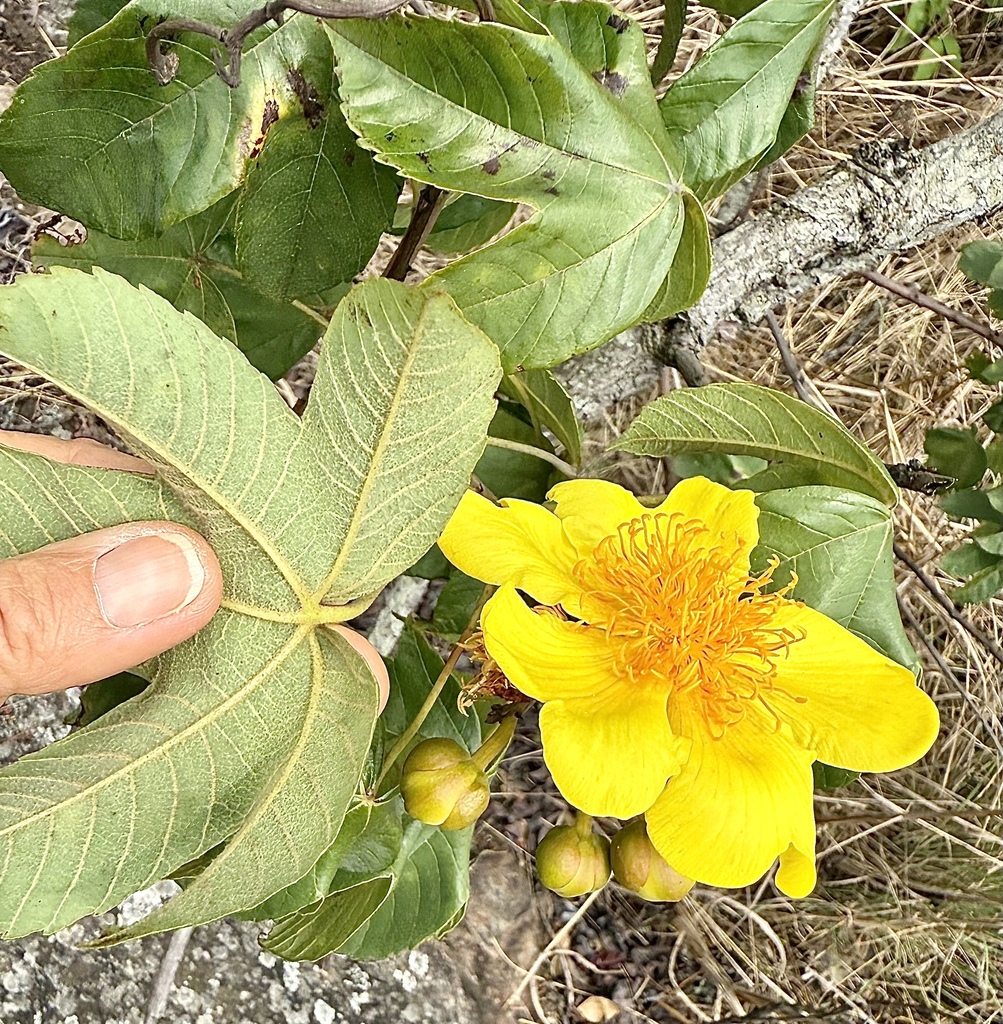
Cochlospermum angolense
- Origin
- Africa
- Part used
- See detailed notebook
- Tradition
- Traditional ethnobotany
Beneath the wooded savannas of southern and central Africa, Cochlospermum angolense unfurls its large yellow flowers heralding the dry season. Its roots and bark, prized by traditional healers, hold a long-standing place in village pharmacopeias in Angola, Zambia, and neighboring regions. It is sometimes called the "bushveld rose" for the brilliance of its blooms preceding its leaves.
Traditional uses
Traditional liver support
A root decoction is traditionally drunk to support liver function and help with digestive troubles, a use reported in several regions of southern Africa.
Easing joint pain
Bark- or root-based preparations were applied or consumed to relieve muscle and joint pain according to local tradition.
Care of wounds and skin conditions
The gum and root pulp were traditionally used externally to promote wound healing and soothe certain skin irritations.
Traditional use against fevers
Certain communities used the root decoction as a traditional remedy during feverish episodes, as part of folk medicine practices.
What to know before use
A traditional use poorly documented scientifically: seek the advice of a health professional before any use. Not recommended for pregnant or breastfeeding women, for lack of sufficient safety data. Do not exceed occasional use and avoid in children without medical advice. Certain species of the genus Cochlospermum contain compounds whose interactions with medications are not well established.
The detailed notebook
- Prepared as a paste or decoction
- Traditional duration of use
- Known contraindications
- Related species and their uses
Where to find it
Partner herbalists — available with the detailed notebook.
Sources
PFAF