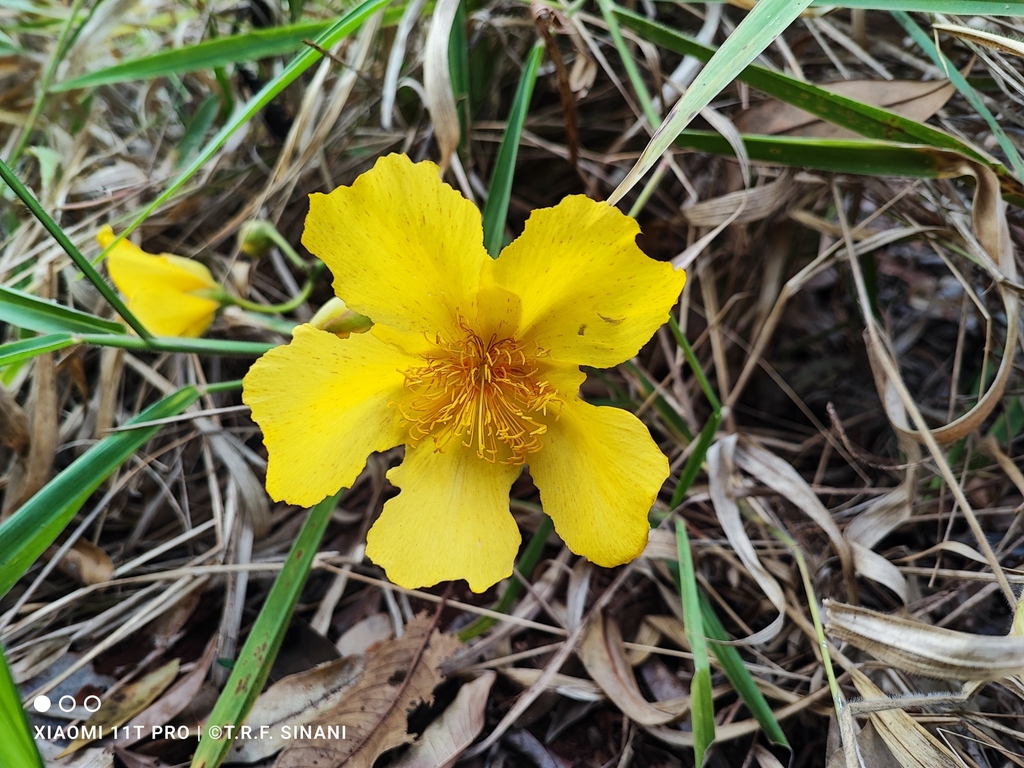
Cochlospermum regium
- Origin
- South America
- Part used
- See detailed notebook
- Tradition
- Traditional ethnobotany
Cochlospermum regium, called “algodãozinho do campo” or “paina” in the regions of Brazil's Cerrado, is a shrub with a gnarled trunk and resinous sap whose tuberous root has long been gathered by South American folk herbalists. Traditional notebooks from Brazil, Paraguay, and neighboring areas mention it as a remedy for the liver and digestive tract, passed down through generations in the rural communities of the Cerrado.
Traditional uses
Traditional liver support
The root was traditionally used as a decoction to accompany digestive troubles and support liver function, following the folk practices of the Brazilian Cerrado.
Relief of inflammatory states
South American traditional healers attributed soothing properties to this root for various inflammations, particularly of the joints and digestive tract.
External use on wounds
The resin and crushed root were sometimes used as a traditional poultice to promote the healing of small wounds or skin irritations.
A folk remedy against fever
Some oral traditions report the use of root decoction as a fever reducer, as part of the folk pharmacopoeia of the Cerrado.
What to know before use
A scientifically under-studied plant: its traditional use does not exempt one from medical advice before any use. Not recommended for pregnant or breastfeeding women, for lack of sufficient safety data. Do not exceed occasional, traditional use; avoid prolonged intake without guidance from a health professional. Possible interactions with medications, particularly those affecting the liver: seek advice before combining.
The detailed notebook
- Prepared as a paste or decoction
- Traditional duration of use
- Known contraindications
- Related species and their uses
Where to find it
Partner herbalists — available with the detailed notebook.
Sources
PFAF