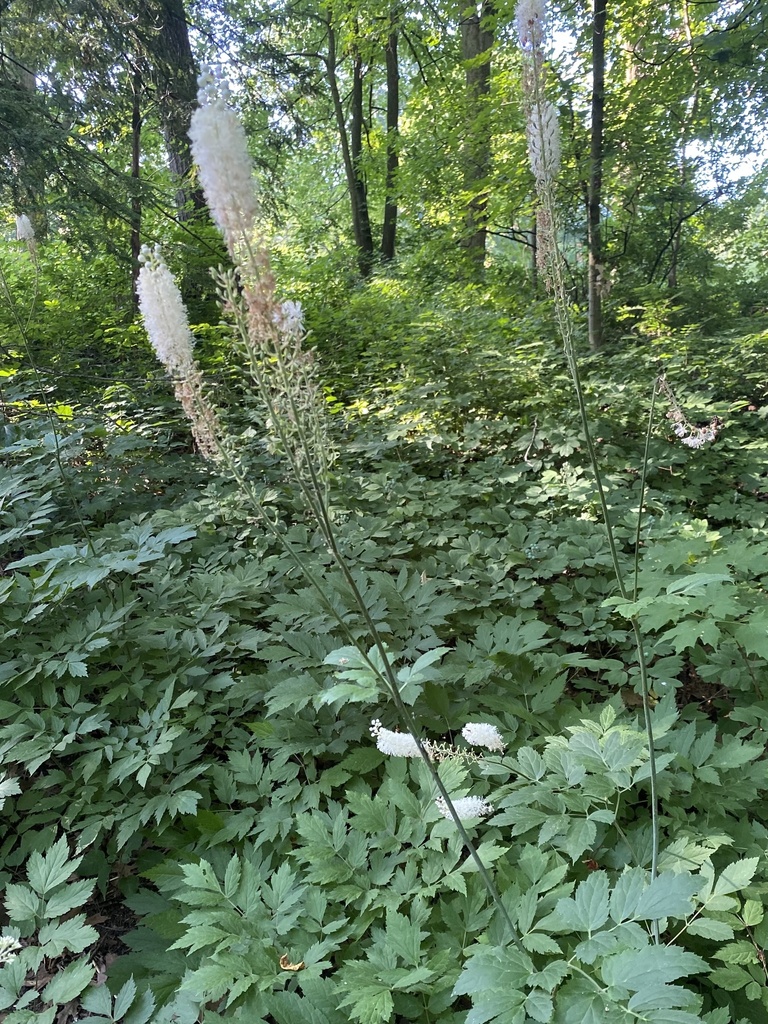
Black cohosh
- Origin
- North America
- Part used
- Leaves, Root
- Tradition
- Traditional ethnobotany
Black cohosh, or Actaea racemosa, grew in the damp undergrowth of North America, where Indigenous peoples drew from it a remedy for women's ailments and joint pain. European settlers in turn made widespread use of it from the nineteenth century onward, adding it to folk pharmacopoeia. Its dark, distinctively scented rhizome remains today the part most sought by herbalists.
Traditional uses
Help with menopausal symptoms
Traditionally, the root was used to ease hot flashes and menopausal discomfort, a use popularized as early as the nineteenth century in North America.
Relief for joint pain
Native American healers used the root decoction to relieve rheumatic pain and muscle stiffness.
Support for painful periods
The rhizome was traditionally grouped with so-called 'emmenagogue' plants, reputed to promote a more comfortable menstrual cycle.
A traditional use against coughing
The leaves, and sometimes the root, went into preparations meant to ease coughing and airway irritation, according to certain North American folk traditions.
Before you use it
Discouraged during pregnancy and breastfeeding because of properties traditionally described as uterotonic. Do not use without medical advice in cases of liver problems, as a link to liver damage has been reported in the literature. Possible interactions with hormone treatments and certain medications: seek the advice of a health professional before any use. Use not recommended in children or over a prolonged period without professional supervision.
The detailed notebook
- Prepared as a paste or decoction
- Traditional duration of use
- Known contraindications
- Related species and their uses
Where to find it
Partner herbalists — available with the detailed notebook.
Sources
PFAF, Wikipedia