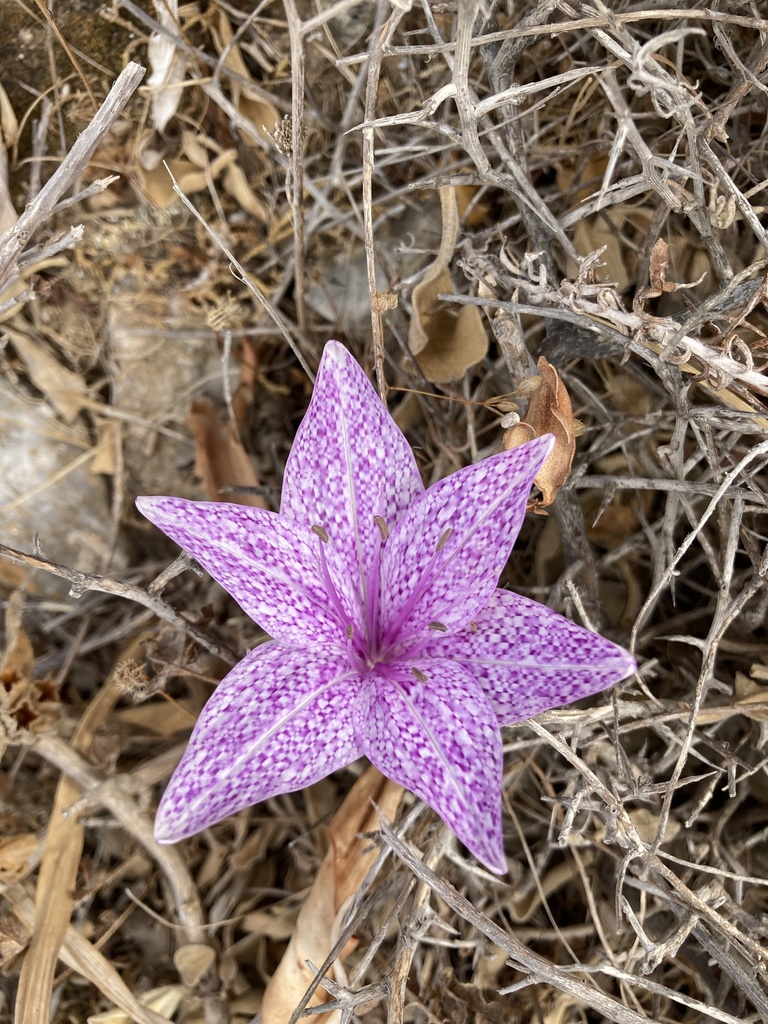
Colchicum variegatum
- Origin
- Europe
- Part used
- See detailed notebook
- Tradition
- Traditional ethnobotany
The variegated meadow saffron, a southern cousin of the autumn crocus, grows on the rocky shores of the Aegean basin and a few Mediterranean islands. Old naturalists ranked it among the feared plants, known as much for their supposed virtues as for their extreme danger, and its use belonged almost exclusively to learned pharmacopeia rather than to folk remedy.
Traditional uses
Traditional relief for gout
Like other meadow saffrons, this species was historically associated with the treatment of gout attacks and acute joint pain in certain old Mediterranean pharmacopeias.
An ingredient in apothecary preparations
The seeds and bulb were sometimes used, under strict control, in nineteenth-century apothecary preparations, due to their richness in active alkaloids.
Occasional use in folk veterinary medicine
In certain rural regions, a very limited and cautious traditional use is reported for certain inflammatory conditions in livestock, always at minute doses.
Before you use it
A highly toxic plant: it contains colchicine, an alkaloid that can be fatal even at low doses; any internal use is strongly discouraged outside of strict medical supervision. Never confuse it with wild garlic or other plants with similar leaves, a confusion behind serious, documented poisonings. Strictly forbidden for pregnant or breastfeeding women, children, and anyone without specialized medical supervision. Possible dangerous interactions with numerous medications; never combine with ongoing treatment without medical advice.
The detailed notebook
- Prepared as a paste or decoction
- Traditional duration of use
- Known contraindications
- Related species and their uses
Where to find it
Partner herbalists — available with the detailed notebook.
Sources
Wikipedia