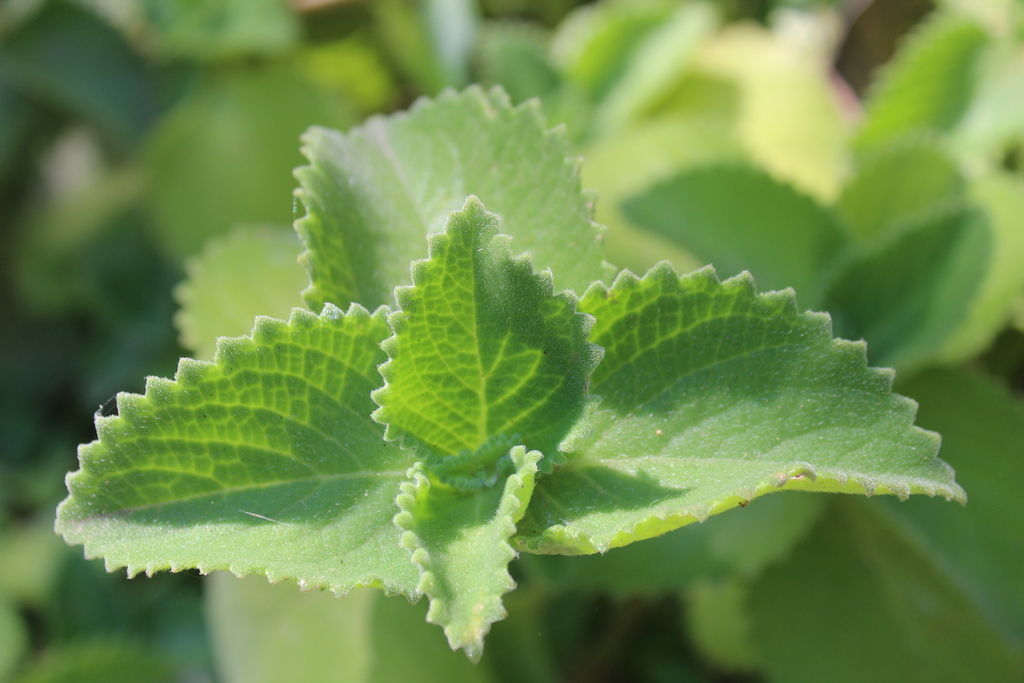
Coleus amboinicus
- Origin
- Africa
- Part used
- Leaves
- Tradition
- Traditional ethnobotany
In gardens across East Africa as well as along the coasts of the Indian Ocean, Coleus amboinicus has long found its place near the kitchen, valued for its thick foliage and its powerful scent reminiscent of oregano and thyme combined. Passed down from generation to generation, this fleshy plant accompanied both meals and everyday minor ailments. The elders sometimes called it the "plant for all fevers" or "Cuban mint," a sign of the place it held among folk remedies.
Traditional uses
What to know before use
Avoid prolonged or high-dose internal use in pregnant or breastfeeding women, for lack of sufficient data. Do not exceed occasional traditional uses; prolonged use is not documented as safe. In case of doubt, ongoing treatment, or an allergic background, seek the advice of a health professional. Reserved for occasional use in adults; not recommended for young children without medical advice.
The detailed notebook
- Prepared as a paste or decoction
- Traditional duration of use
- Known contraindications
- Related species and their uses
Where to find it
Partner herbalists — available with the detailed notebook.
Sources
PFAF, PubMed