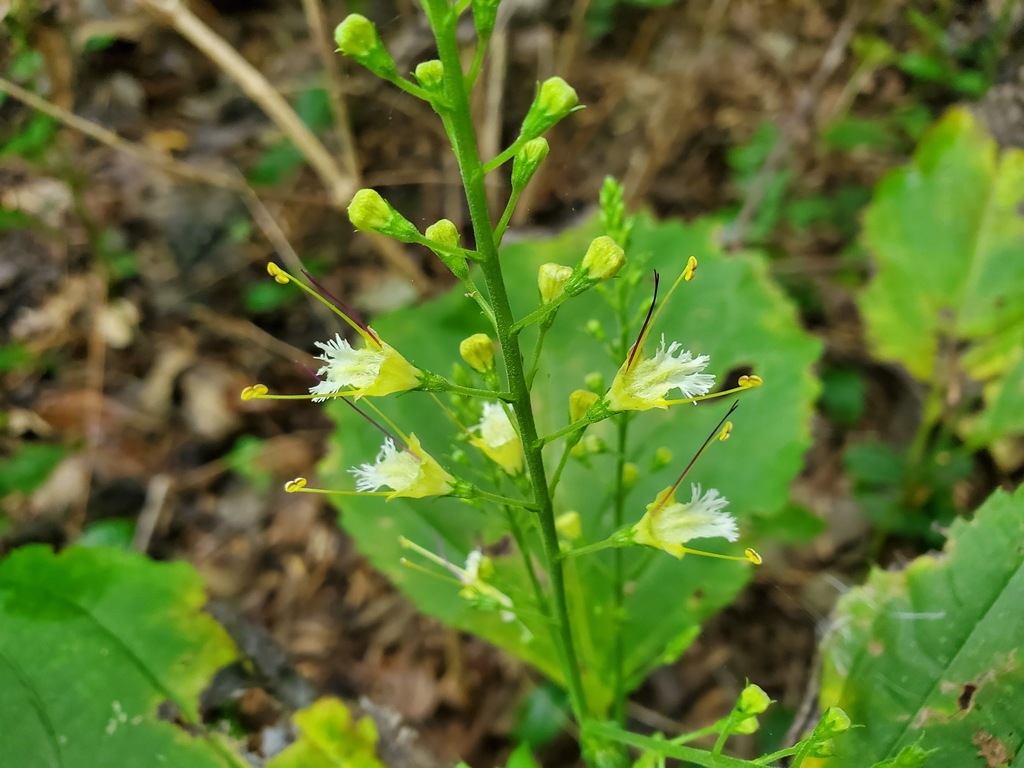
Collinsonia canadensis
- Origin
- North America
- Part used
- See detailed notebook
- Tradition
- Traditional ethnobotany
Named "stone root" by Anglo-Saxon settlers, Collinsonia canadensis was revered by several Indigenous peoples of North America for the sturdiness of its knotted root, as hard as stone. Nineteenth-century American eclectic herbalists made it one of their remedies of choice for venous and digestive ailments.
Traditional uses
Support for venous circulation
Collinsonia root was traditionally used to support comfort in heavy legs and help with the discomforts of varicose veins and hemorrhoids.
Digestive and intestinal comfort
Eclectic herbalists used it to ease digestive discomfort, particularly bloating and the constipation associated with abdominal venous trouble.
Support for the urinary tract
It was sometimes used in folk tradition to help with urinary comfort, particularly with a feeling of pelvic heaviness.
A soothing external use
Applied locally, the prepared root was traditionally used as a compress to soothe sensitive areas, particularly with external hemorrhoids.
Before you use it
Discouraged for pregnant or breastfeeding women, for lack of sufficient safety data. To be avoided in cases of anticoagulant treatment or clotting disorders, because of its potential action on circulation. Prolonged or high-dose use is not documented with certainty; the advice of a health professional or a qualified herbalist is recommended before any course of treatment. Do not give to young children without professional supervision.
The detailed notebook
- Prepared as a paste or decoction
- Traditional duration of use
- Known contraindications
- Related species and their uses
Where to find it
Partner herbalists — available with the detailed notebook.
Sources
PFAF