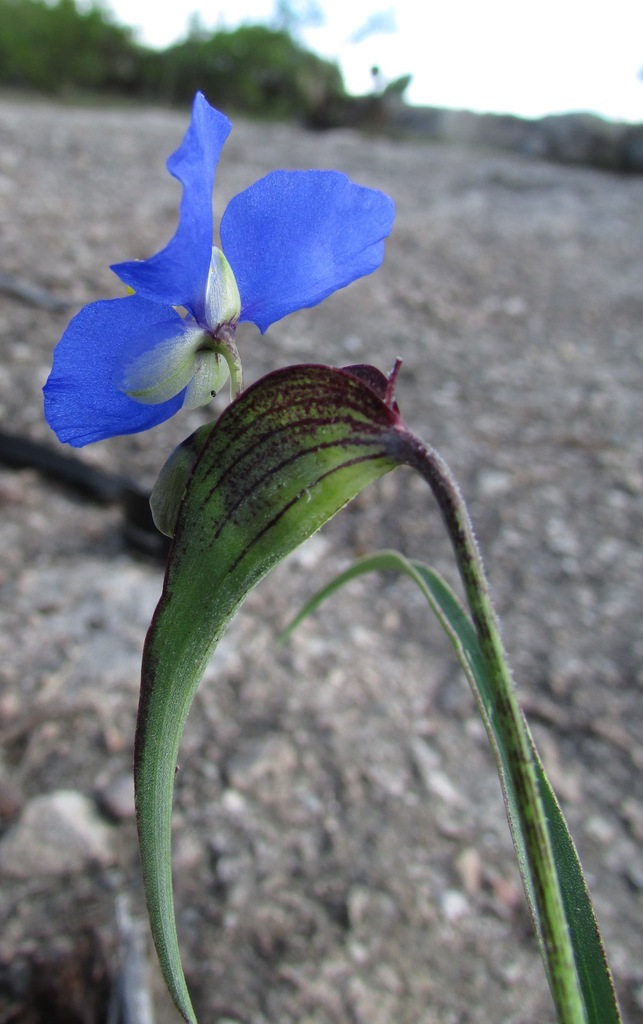
Commelina dianthifolia
- Origin
- North America
- Part used
- Root
- Tradition
- Traditional ethnobotany
Among the quiet grasses of the high prairies and canyons of the American Southwest, Commelina dianthifolia — sometimes called "spiderwort" for its short-lived blue flowers — holds a modest but enduring place in the traditional uses of Indigenous peoples. Its root, more than its aerial parts, drew the attention of the herbalists of these arid regions.
Traditional uses
Traditional support for lactation
Among certain peoples of the American Southwest, the root was traditionally used by nursing mothers, in the hope of encouraging milk production.
An occasional digestive use
The root, prepared as a light decoction, was reportedly used occasionally to ease minor digestive discomfort, according to poorly documented local uses.
A soothing external application
Some ethnobotanical sources mention an external use of the crushed root, applied as a poultice to minor skin irritation.
A place in local Indigenous uses
This plant, though little found in Western writings, appears in certain traditional practices passed down orally within communities of the American Southwest.
Before you use it
The traditional uses of this plant are poorly documented in the available literature; caution calls for not relying on it without the advice of a health professional. Use during breastfeeding or pregnancy should only happen after consulting a midwife, doctor, or qualified herbalist, for lack of reliable safety data. Avoid any self-medication in children or pregnant or breastfeeding women without professional supervision. If in doubt about botanical identification, refrain from any harvesting or preparation, as confusion with other Commelinaceae is possible.
The detailed notebook
- Prepared as a paste or decoction
- Traditional duration of use
- Known contraindications
- Related species and their uses
Where to find it
Partner herbalists — available with the detailed notebook.
Sources
PFAF, Wikipedia