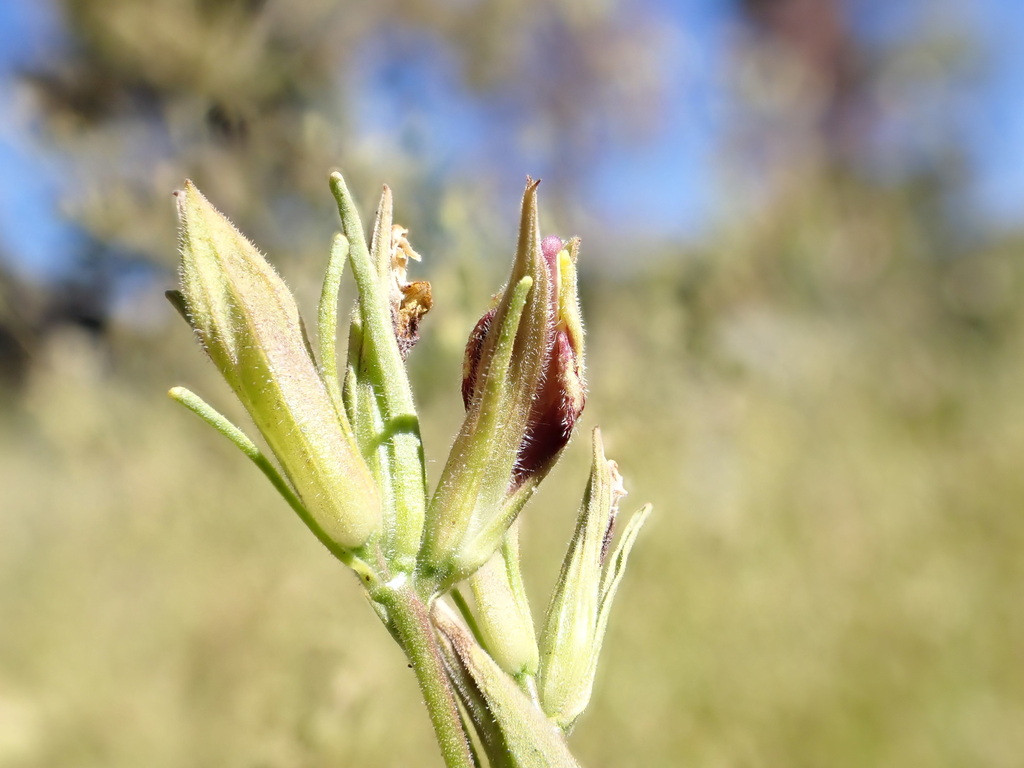
Cordylanthus ramosus
- Origin
- North America
- Part used
- See detailed notebook
- Tradition
- Traditional ethnobotany
Cordylanthus ramosus, a quiet plant of the arid lands of the American West, belongs to a family of plants little known to classic herbariums but sometimes cited in the uses of Indigenous peoples. Its very name, from the Greek for a club-shaped flower, reflects the curiosity it aroused among traveling botanists. Traces of its traditional use remain rare and fragmentary, calling for as much caution as modesty in what can be reported of it.
Traditional uses
A poorly documented plant
Mentions of a traditional use of Cordylanthus ramosus by certain Native American communities of the American West exist, but remain fragmentary and sparsely detailed in the available sources.
An occasional, localized use
Certain plants of this genus were reportedly used in a very local, occasional way, without the practice having spread or been widely passed down beyond its native territory.
A plant mainly observed
Cordylanthus ramosus today remains more a plant of botanical and ecological interest, noted for its presence in semi-arid environments, than one with a well-established and transmitted traditional use.
Before you use it
In the absence of reliable, extensive documentation on this plant, any internal use should be avoided without the advice of a professional qualified in herbal medicine or plant toxicology. As the plant is neither cultivated nor distributed for everyday herbalist purposes, no guarantee can be given about its composition, potential toxicity, or effects. It is discouraged to consume this plant when wild-harvested, particularly for pregnant or breastfeeding women, children, and those undergoing medical treatment. As certain Cordylanthus species are rare or protected depending on the region, their harvesting may be regulated; check the local status before any harvesting.
The detailed notebook
- Prepared as a paste or decoction
- Traditional duration of use
- Known contraindications
- Related species and their uses
Where to find it
Partner herbalists — available with the detailed notebook.
Sources
PFAF