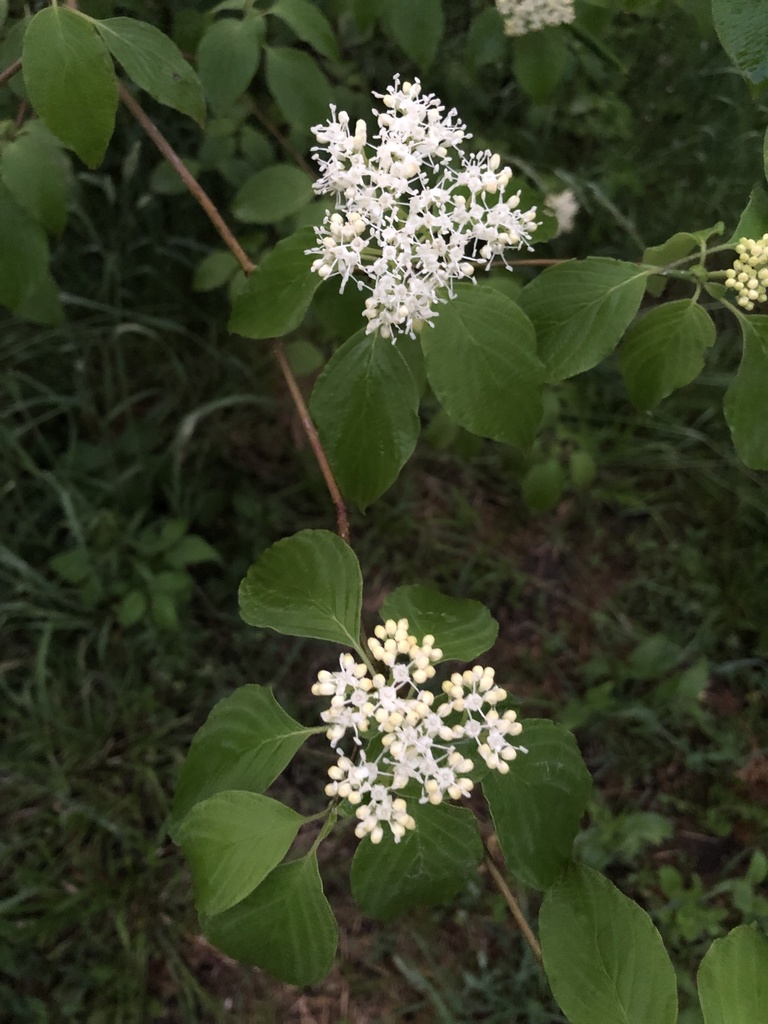
Cornus alternifolia
- Origin
- North America
- Part used
- See detailed notebook
- Tradition
- Traditional ethnobotany
Cornus alternifolia, a quiet shrub of North American undergrowth, is sometimes called "arrowwood" by Indigenous peoples who used its straight stems. Its bark and branches found a place in certain traditional Native American pharmacopoeias, in the manner of other dogwoods of the continent.
Traditional uses
A bitter tonic bark
The dried bark was traditionally infused or decocted by certain Native American communities for its bitter properties, used as an occasional digestive tonic.
An old fever-remedy use
In the manner of other American dogwoods, the bark was sometimes used in preparations meant to help with feverish states, a use now fallen out of favor.
Wood for tools and arrows
The straight, sturdy stems of this shrub were prized for making arrows, spindles, and small tools, a use that was not medicinal but is culturally documented.
A soothing external application
Decoctions of bark or leaves were reportedly applied locally as a traditional external use, though this practice was not widely standardized.
Before you use it
A traditional use poorly documented scientifically: caution is warranted and the advice of a health professional is recommended before any internal use. Avoid in pregnant or breastfeeding women, for lack of sufficient safety data. Do not use in children without the supervision of a qualified professional. Certain dogwood species contain compounds whose effects are not fully characterized; avoid prolonged self-medication.
The detailed notebook
- Prepared as a paste or decoction
- Traditional duration of use
- Known contraindications
- Related species and their uses
Where to find it
Partner herbalists — available with the detailed notebook.
Sources
Wikipedia