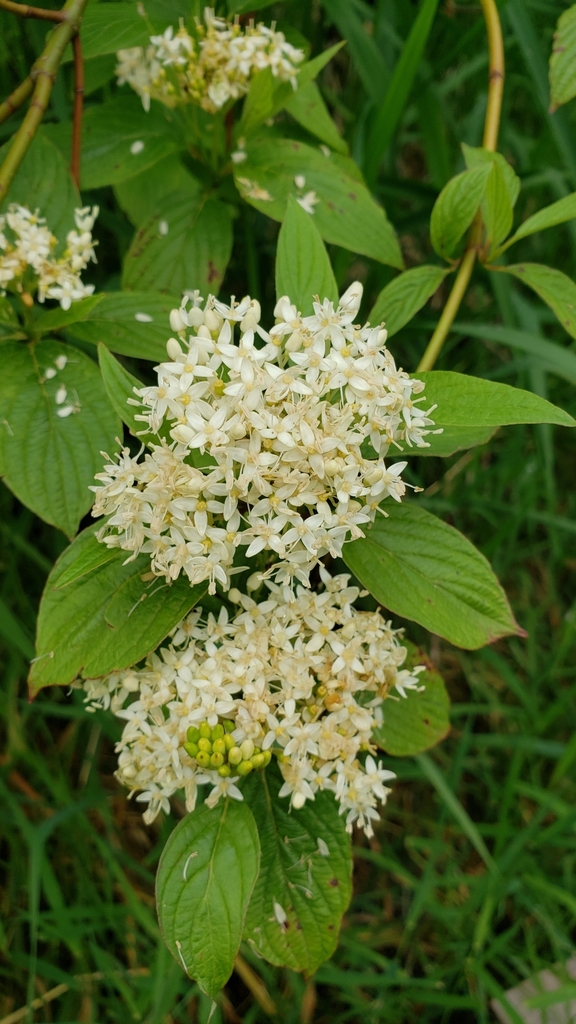
Cornus sericea
- Origin
- North America
- Part used
- See detailed notebook
- Tradition
- Traditional ethnobotany
Red-osier dogwood, a shrub whose red stems set North America's frozen riverbanks ablaze, held a place of honor in the pharmacopoeia of Indigenous peoples. Its bark, branches, and leaves served both for bodily care and for ritual and smoking uses, particularly mixed into kinnikinnick.
Traditional uses
Bitter bark as a digestive tonic
The inner bark, reputed to be bitter and tonic, was traditionally infused or decocted by certain Indigenous nations to support digestion and stimulate the appetite.
A traditional fever remedy
In the manner of cinchona bark, whose bitterness it shares, red-osier dogwood bark was used as a decoction to help with feverish states and diffuse pain.
External care for minor wounds
Crushed bark and leaves, or as a poultice, traditionally served to tend to minor wounds and skin irritation.
An ingredient of the kinnikinnick blend
The dried, scraped bark went into traditional smoking blends (kinnikinnick), a cultural and ceremonial practice rather than a strictly medicinal one.
Before you use it
A traditional use poorly documented scientifically: to be approached with caution and never substituted for medical advice. Contraindicated for pregnant or breastfeeding women, for lack of sufficient safety data. Do not give to young children without the advice of a qualified professional. Avoid prolonged or high-dose use, as the bark's bitterness can irritate the digestive mucous membranes.
The detailed notebook
- Prepared as a paste or decoction
- Traditional duration of use
- Known contraindications
- Related species and their uses
Where to find it
Partner herbalists — available with the detailed notebook.
Sources
Wikipedia