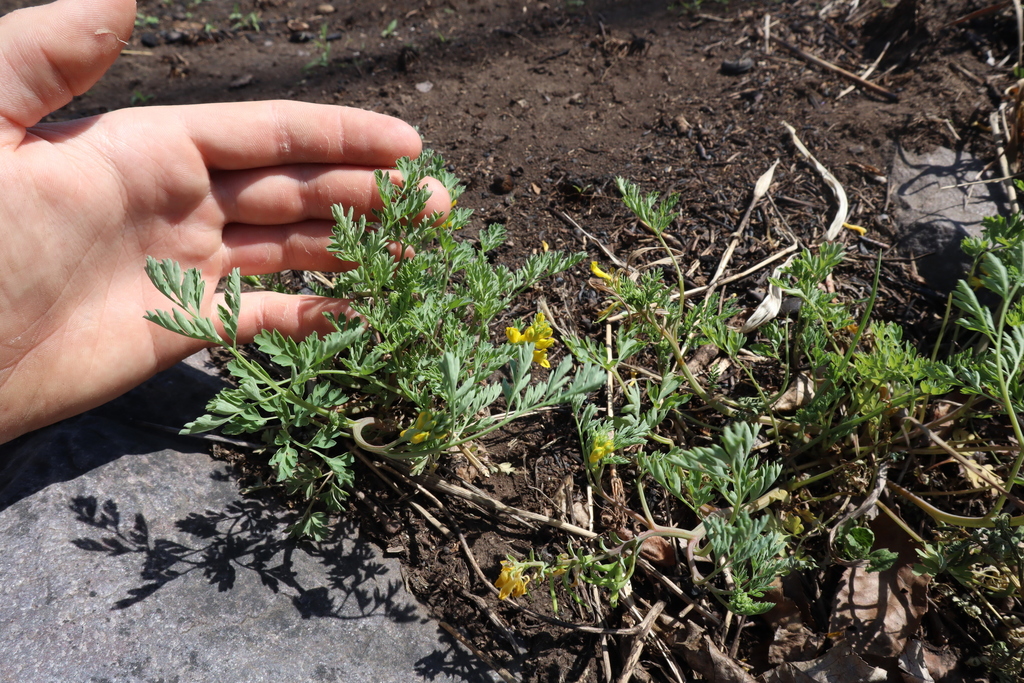
golden corydalis
- Origin
- North America
- Part used
- See detailed notebook
- Tradition
- Traditional ethnobotany
Golden corydalis (Corydalis aurea) is a small plant of North America's undergrowth and rocky ground, recognizable by its clusters of bright yellow flowers. Certain Native American nations credited it with pain-easing properties, in a cautious, limited use, as the plant belongs to a family known for its potent alkaloids.
Traditional uses
Traditional pain relief
The root of golden corydalis was traditionally used externally or as a light preparation to relieve certain pain, particularly muscle or joint pain, according to reported Native American uses.
Application to wounds and bruises
Certain traditions report the use of poultices made from crushed root on bruises and skin swelling.
A reported mild calming effect
The whole plant, given its alkaloid-rich botanical family, was reportedly used occasionally for its mild sedative properties in certain traditional uses.
Before you use it
A plant containing alkaloids whose effects and toxicity are insufficiently documented: internal use to be avoided without the advice of a qualified professional. Discouraged for pregnant or breastfeeding women, as well as children. Do not combine with sedatives, anti-anxiety medication, or other substances acting on the central nervous system, because of the risk of interaction. Any prolonged or high-dose use should be avoided; consult a health professional before any use.
The detailed notebook
- Prepared as a paste or decoction
- Traditional duration of use
- Known contraindications
- Related species and their uses
Where to find it
Partner herbalists — available with the detailed notebook.
Sources
PFAF, Wikipedia