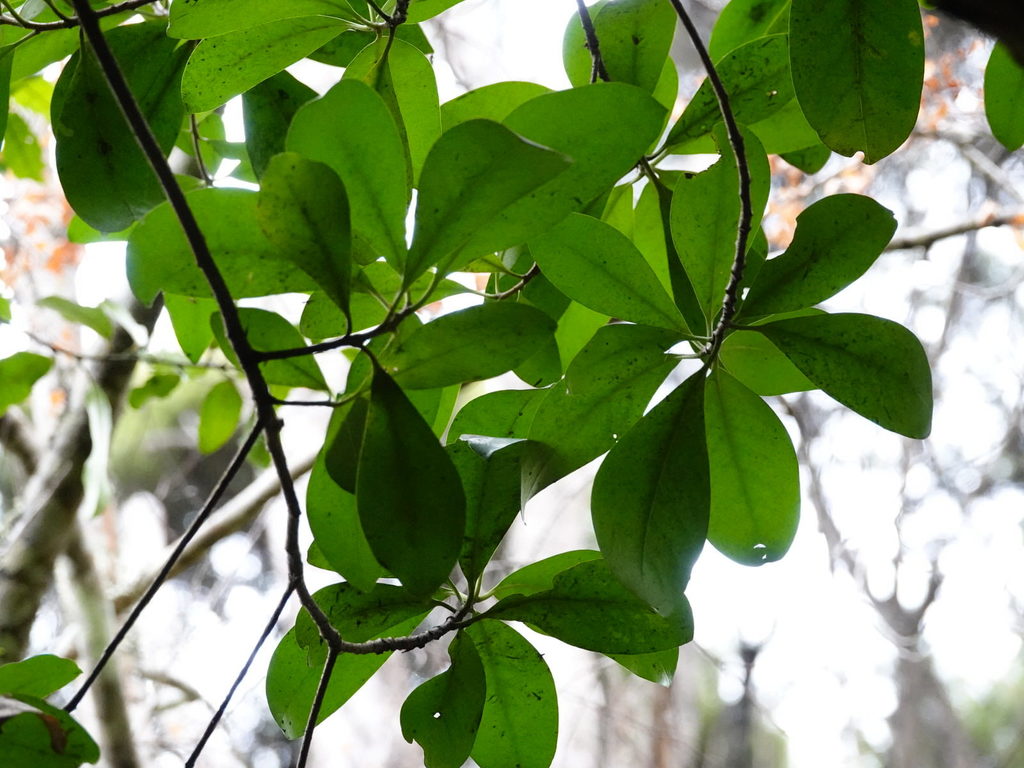
Corynocarpus laevigatus
- Origin
- Oceania
- Part used
- Seeds/fruits
- Tradition
- Traditional ethnobotany
Karaka, an emblematic tree of New Zealand's shores, held for the Maori an importance both nourishing and symbolic. Its orange fruits, appetizing in appearance, concealed a kernel whose fearsome toxicity required ancestral know-how to render it edible. This dual nature — poison and food — made Corynocarpus laevigatus a plant surrounded by rigorous preparation rites passed down from generation to generation.
Traditional uses
Kernel processed into a stored food
After a long detoxification process (prolonged cooking, soaking, and fermentation), the karaka kernel was traditionally ground into a paste or dried to build a winter food reserve among the Maori.
Collective processing and communal knowledge
Preparing the fruit, done collectively in pits or by cooking in the traditional earth oven (hangi), relied on precise knowledge passed down orally, since an error could prove gravely toxic.
Wood used for local craft
The wood of the tree, more incidental, was sometimes used locally for small utilitarian objects, though this use is far less documented than that of the fruit.
A tree marking ancient human presence
The presence of karaka in certain places traditionally served as an indicator of ancient human occupation, the tree having often been planted or encouraged near dwellings.
Before you use it
The raw seeds of Corynocarpus laevigatus contain karakin, a neurotoxic compound that may cause severe convulsions, lasting paralysis, or even death; they must never be eaten without complete, well-mastered traditional processing. The detoxifying preparation (long cooking, prolonged soaking, fermentation) is specialized know-how that cannot be improvised; incomplete or poorly mastered processing leaves dangerous toxicity intact. This plant is not advised for anyone untrained in these traditional techniques, nor for pregnant or breastfeeding women and children, owing to proven neurotoxic risks. No internal use should be considered without the advice of a health professional or a recognized holder of local traditional knowledge.
The detailed notebook
- Prepared as a paste or decoction
- Traditional duration of use
- Known contraindications
- Related species and their uses
Where to find it
Partner herbalists — available with the detailed notebook.
Sources
PFAF, Wikipedia