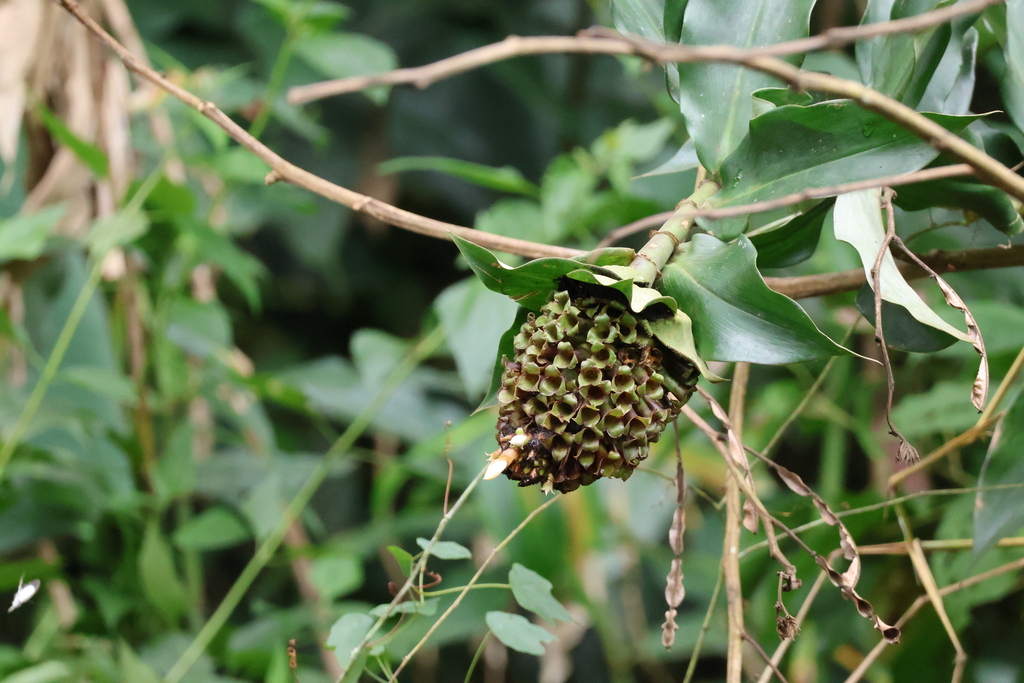
Costus lucanusianus
- Origin
- Africa
- Part used
- See detailed notebook
- Tradition
- Traditional ethnobotany
In the humid undergrowth of tropical Africa, Costus lucanusianus raises its distinctive spiraling stems toward the canopy. Traditional healers of Central and West Africa have relied for generations on its rhizomes and leaves for a range of everyday remedies. A discreet plant of forest clearings, yet well established in the village pharmacopeia.
Traditional uses
Traditional digestive support
A rhizome decoction is traditionally drunk to ease digestive troubles, bloating, and abdominal pain in certain regions of West Africa.
Use against various pains
The rhizome, as a decoction or application, is reported as a traditional remedy against muscle and joint pain.
Traditional support during childbirth
In several Central African traditions, the plant is cited among the remedies used around the time of childbirth, particularly to ease labor — a use that calls for particular caution.
Traditional wound care
Crushed leaves or the plant's juice are traditionally applied to wounds and superficial injuries to promote cleansing.
What to know before use
A traditional use around pregnancy and childbirth is reported: the plant should be strictly avoided by pregnant women outside of knowledgeable traditional guidance, due to a possible effect on the uterus. Little modern scientific research exists on this plant's toxicity: caution is advised, particularly for prolonged use or high doses. Do not use in children, breastfeeding women, or in combination with medications without the advice of a health professional. Any application on broken skin or internal use should remain occasional and be stopped in case of an unusual reaction.
The detailed notebook
- Prepared as a paste or decoction
- Traditional duration of use
- Known contraindications
- Related species and their uses
Where to find it
Partner herbalists — available with the detailed notebook.
Sources
PFAF