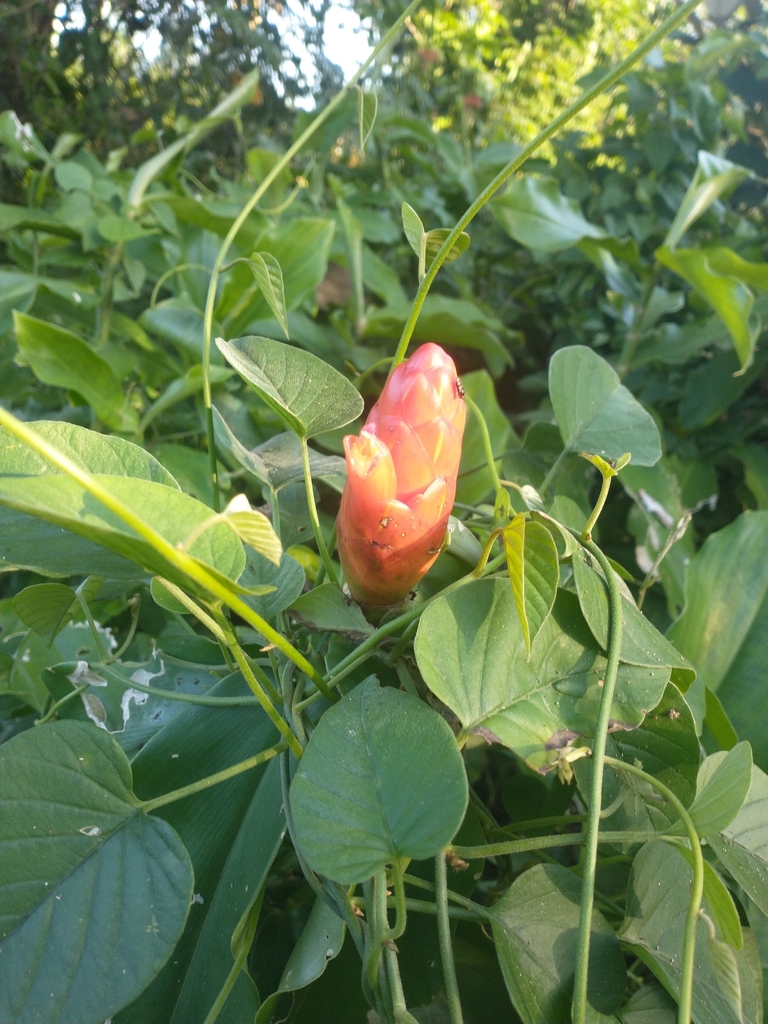
Costus scaber
- Origin
- North America
- Part used
- See detailed notebook
- Tradition
- Traditional ethnobotany
In damp undergrowth and tropical clearings, Costus scaber unfurls its ridged stems and spirally arranged leaves, a distinctive trait that earned it, among traditional healers of the Americas, the nickname "wild sugarcane." Many communities of Central America and the Caribbean have long given it a place in their plant pharmacopoeia, passed down orally from generation to generation.
Traditional uses
Traditional support for the female cycle
The stem and leaves were traditionally used by certain communities to help with menstrual trouble, particularly to ease cycle-related discomfort.
An ancestral diuretic use
The rhizome and juicy stem were used as a decoction to promote urinary elimination, for a traditional drainage purpose.
A soothing local application
The fresh sap of the stem was applied locally to the skin by certain traditional healers to soothe irritation and minor skin conditions.
A traditional fever remedy
Certain folk traditions report the use of decoctions of this plant to help with feverish states, alongside other plant remedies.
Before you use it
This plant is traditionally associated with hormonal properties and is not recommended during pregnancy or breastfeeding. The traditional uses of Costus scaber remain poorly documented scientifically; it is essential to consult a health professional before any internal use. Avoid use in children for lack of sufficient safety data. Do not combine with diuretic or hormonal treatments without medical advice, because of the risk of interaction.
The detailed notebook
- Prepared as a paste or decoction
- Traditional duration of use
- Known contraindications
- Related species and their uses
Where to find it
Partner herbalists — available with the detailed notebook.
Sources
PFAF