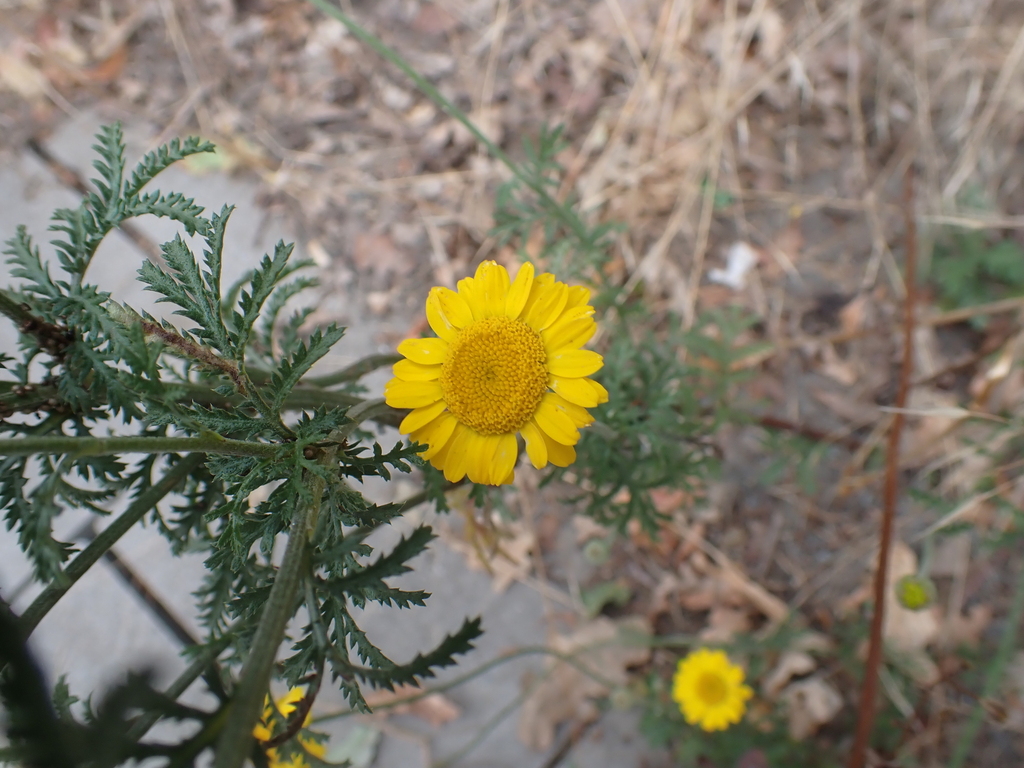
Cota tinctoria
- Origin
- Europe
- Part used
- See detailed notebook
- Tradition
- Traditional ethnobotany
Cota tinctoria, sometimes called dyer's chamomile, has long brightened the embankments and gardens of Europe with its golden flowers. While its best-known use remains as a plant dye, old-time herbalists also credited it with a few quiet virtues, similar to those of other chamomiles. Today it remains a plant of curiosity, grown more for its color than for its internal uses.
Traditional uses
A traditional yellow dye
The dried flowers of Cota tinctoria were traditionally used to obtain yellow dyes for wool and textiles, a use that gave the plant its name.
A soothing tea after meals
In the manner of chamomiles, a light infusion of its flowers was sometimes drunk at the end of a meal to help digestion.
A traditional evening tea
Some herbal records report its use as a calming evening tea, in keeping with the tradition of chamomiles used to promote relaxation.
A floral-water bath
The decoction water from the flowers may have been used externally, as a soothing lotion or compress on the skin, according to regional folk uses.
Before you use it
The internal uses of this plant are poorly documented scientifically; caution is advised, and a healthcare professional should be consulted before any regular use. As with other chamomiles, an allergic reaction is possible in people sensitive to plants in the daisy family. Not recommended during pregnancy or breastfeeding, for lack of sufficient data. Do not exceed occasional, light use, particularly given the absence of detailed traditional sources on dosage.
The detailed notebook
- Prepared as a paste or decoction
- Traditional duration of use
- Known contraindications
- Related species and their uses
Where to find it
Partner herbalists — available with the detailed notebook.
Sources
PFAF