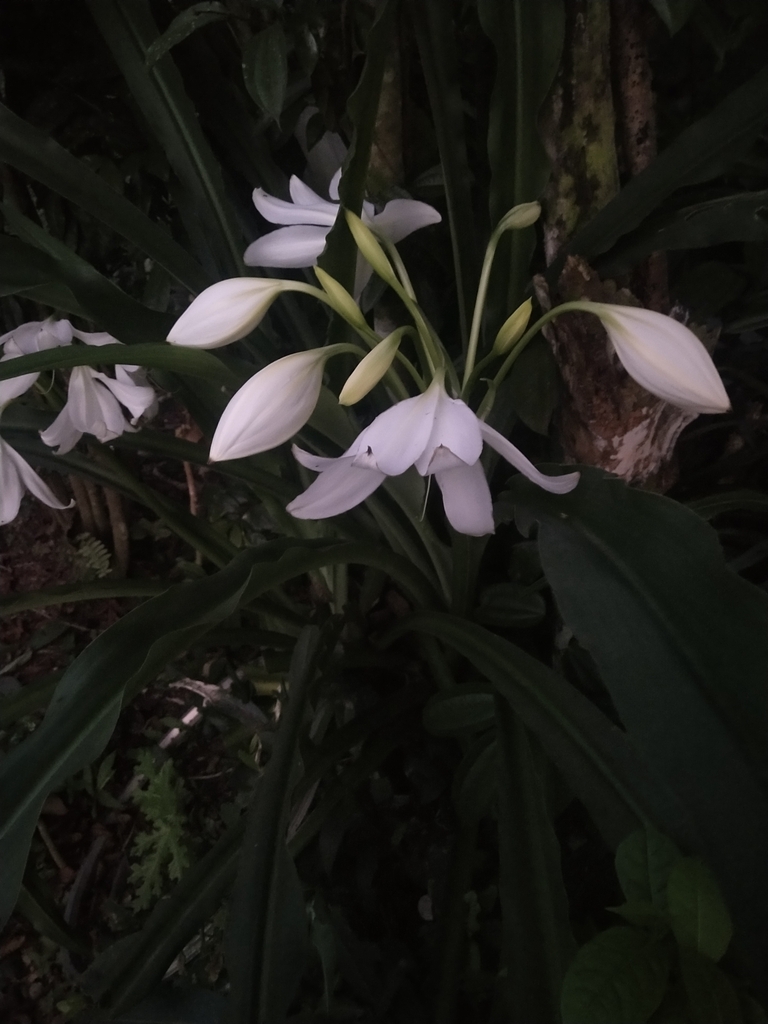
Crinum macowanii
- Origin
- Africa
- Part used
- See detailed notebook
- Tradition
- Traditional ethnobotany
Crinum macowanii, a large wild lily with broad buried bulbs, grows in the savannas and damp grasslands of southern and eastern Africa. Traditional healers of many Bantu peoples have long known its bulb, valued for its properties on painful joints and certain skin conditions. A plant surrounded by respect, as its use demands discernment and caution.
Traditional uses
Joint pain and rheumatism
The bulb, prepared as a poultice or external decoction, was traditionally applied to swollen or painful joints in several southern African traditions.
Wounds and skin conditions
Applied locally, the pulp of the fresh bulb was reportedly used to promote wound healing and soothe certain skin irritations.
Respiratory conditions
Certain traditions report a use of the bulb, prepared as a low-concentration decoction, to relieve coughing and congestion, always under the supervision of a knowledgeable person.
Traditional postpartum support
In some regions, the bulb was used ritually and traditionally around the postpartum period, a use now not recommended without medical supervision.
What to know before use
The bulb contains Amaryllidaceae-type alkaloids that can be toxic at high doses or with prolonged use; uncontrolled ingestion is strongly discouraged. Internal use is strictly reserved for supervision by a health professional or an experienced traditional herbalist. Not recommended for pregnant or breastfeeding women, or for children, due to a lack of safety data. Do not confuse with other ornamental bulbs of the Amaryllidaceae family, which are also toxic but used differently.
The detailed notebook
- Prepared as a paste or decoction
- Traditional duration of use
- Known contraindications
- Related species and their uses
Where to find it
Partner herbalists — available with the detailed notebook.
Sources
PFAF, Wikipedia