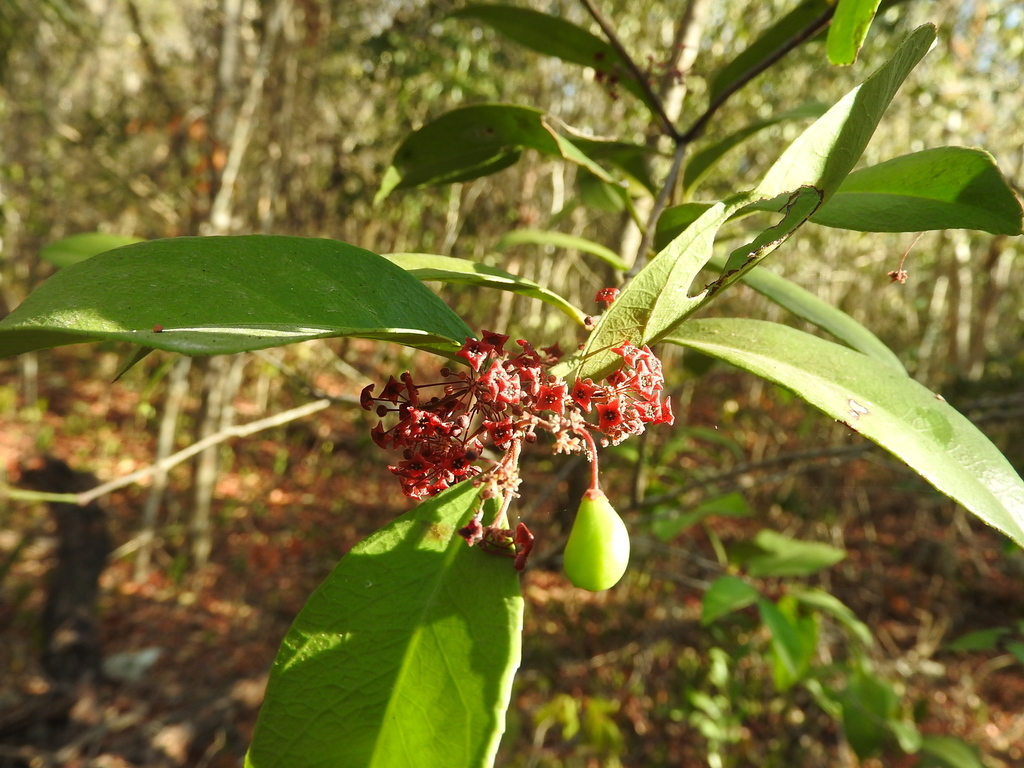
Crossopetalum gaumeri
- Origin
- North America
- Part used
- See detailed notebook
- Tradition
- Traditional ethnobotany
Crossopetalum gaumeri is a quiet shrub of the dry forests of the Yucatán Peninsula, known locally by Mayan names passed down from generation to generation. Traditional healers of the region long included it in their pharmacopoeia to support the body against common ailments. Its use, however, remains poorly documented by modern research, and our knowledge of it comes mainly from oral tradition and a few field ethnobotanists.
Traditional uses
Traditional support for infection
In Yucatán Maya folk medicine, the leaves and bark of this shrub were traditionally prepared to support the body during common infections.
A use for seasonal colds
Certain local healers report a use as a decoction during episodes of mild fever or colds, in the manner of other regional tonic plants.
A traditional application on the skin
The crushed or infused bark was reportedly used externally to soothe certain skin irritation, according to locally reported uses.
Before you use it
As scientific data on this plant are very limited, it is recommended to consult a health professional before any use. Avoid any use in pregnant or breastfeeding women, as well as young children, for lack of safety data. Do not exceed the occasional traditional uses described here; avoid any prolonged intake without the advice of a qualified practitioner. If in doubt about botanical identification, refrain: several related Yucatán species can be confused with it.
The detailed notebook
- Prepared as a paste or decoction
- Traditional duration of use
- Known contraindications
- Related species and their uses
Where to find it
Partner herbalists — available with the detailed notebook.
Sources
PFAF, Wikipedia