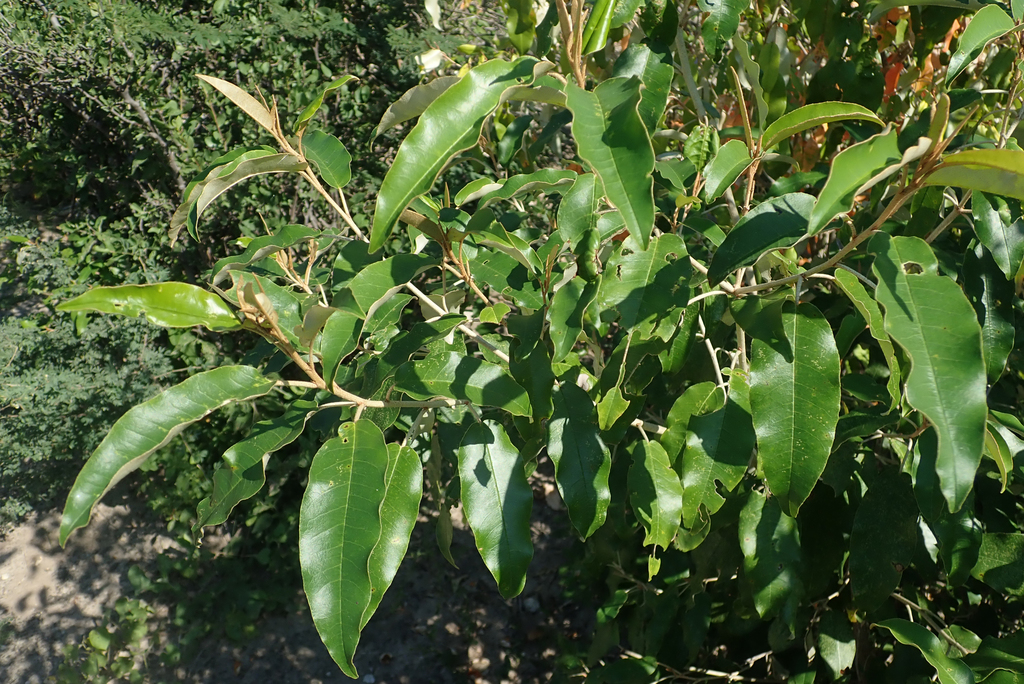
Croton gratissimus
- Origin
- Africa
- Part used
- See detailed notebook
- Tradition
- Traditional ethnobotany
A shrub with silvery foliage and fragrant bark, Croton gratissimus grows on the rocky hills of southern Africa, where it is often called the "lavender-scented tree." Traditional healers of South Africa and Zimbabwe used its bark and leaves as a versatile remedy, passed down orally from generation to generation. This entry restores this plant memory for historical and cultural purposes.
Traditional uses
Relief of digestive troubles
The bark, as a decoction, was traditionally drunk to ease stomach pain and intestinal troubles in several southern African communities.
Respiratory conditions and coughing
The dried leaves, sometimes smoked or infused, were used traditionally to relieve coughing and respiratory discomfort.
Fevers and bodily pain
A bark decoction traditionally served to lower fever and ease various pains, particularly rheumatic ones.
Traditional skin use
Bark- or leaf-based preparations were applied locally to the skin for their soothing properties as reported by tradition.
What to know before use
The genus Croton is known to contain compounds that can be irritating or toxic at high doses; internal use should never be undertaken without the advice of a qualified professional. Do not use in pregnant or breastfeeding women, or in young children, as a precaution. Avoid prolonged or high-dose use without supervision, due to a lack of modern safety data. Not recommended in case of ongoing medication, for lack of studies on possible interactions.
The detailed notebook
- Prepared as a paste or decoction
- Traditional duration of use
- Known contraindications
- Related species and their uses
Where to find it
Partner herbalists — available with the detailed notebook.
Sources
PFAF