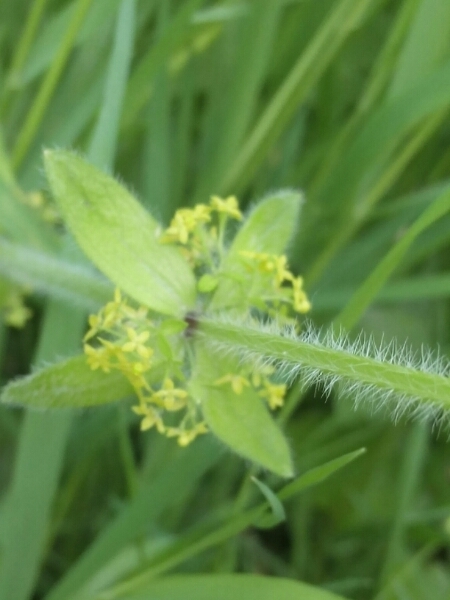
Cruciata laevipes
- Origin
- Europe
- Part used
- See detailed notebook
- Tradition
- Traditional ethnobotany
Crosswort, a humble plant of embankments and meadows across Europe, takes its name from the cross-like arrangement of its leaves, an arrangement that once struck folk herbalists. A cousin of cleavers, it was used in the countryside for its depurative and soothing virtues, though it never achieved the fame of its illustrious relatives in the bedstraw family.
Traditional uses
Support for the digestive system
The whole plant was traditionally brewed as a tea to help digestion and support liver function, in the manner of other depurative bedstraws.
A spring depurative tradition
Like many plants used in spring cures, crosswort was included in blends meant to 'purify the blood' and support the body's eliminatory organs, according to European folk tradition.
Soothing external use
As a poultice or lotion, the crushed fresh plant was applied to the skin to soothe minor irritations and promote superficial healing.
Traditional circulatory support
Some country herbalists attributed to it a gentle action on venous circulation, a use reported but poorly documented in scholarly texts.
Before you use it
Traditional use poorly documented by modern research: caution recommends limiting use to occasional, moderate amounts. Avoid during pregnancy or breastfeeding, for lack of sufficient data. Do not confuse with other bedstraw species when foraging; ensure a certain botanical identification. In case of doubt or ongoing medication, seek the advice of a healthcare professional before any internal use.
The detailed notebook
- Prepared as a paste or decoction
- Traditional duration of use
- Known contraindications
- Related species and their uses
Where to find it
Partner herbalists — available with the detailed notebook.
Sources
PFAF