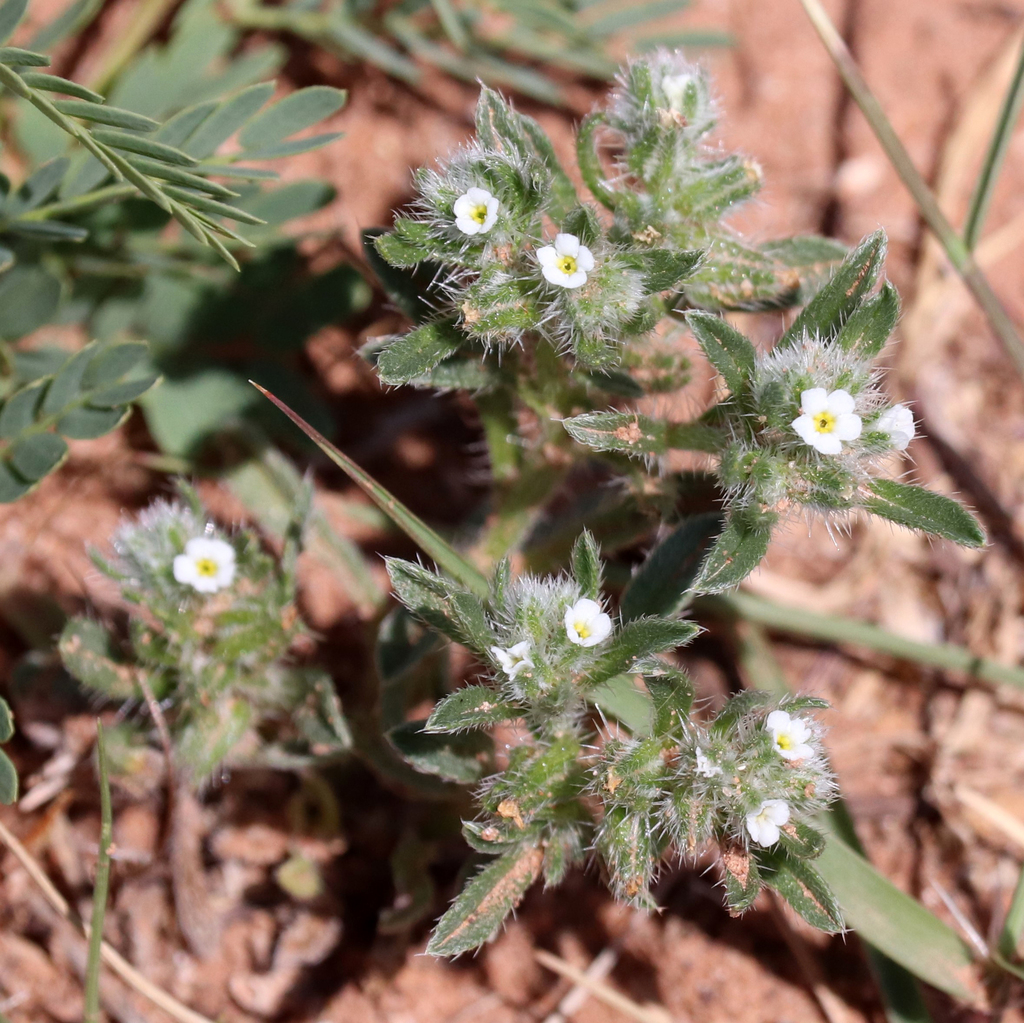
Cryptantha crassisepala
- Origin
- North America
- Part used
- See detailed notebook
- Tradition
- Traditional ethnobotany
A small, quiet plant of North America's arid expanses, Cryptantha crassisepala grows humbly among the stones and sands. The Indigenous peoples of desert regions likely knew it more through observation than through widespread use, so slight is its presence in herbalist notebooks.
Traditional uses
A plant poorly documented in herbalism
Traditional sources concerning the use of this Cryptantha are extremely rare and fragmentary, not allowing precise and reliable uses to be confirmed.
A plant of botanical and ecological interest
This species is mentioned mainly for its role in desert ecosystems, serving as a marker for botanists rather than an ingredient in folk pharmacopoeias.
Borage family, caution advised
Belonging to the borage family, several members of which contain pyrrolizidine alkaloids potentially toxic to the liver, this plant is traditionally not recommended for consumption without proven expertise.
Before you use it
A traditional use very poorly documented: caution calls for not consuming this plant without the advice of a qualified professional. Certain species of the borage family contain pyrrolizidine alkaloids that can be toxic to the liver; as a precaution, this botanical kinship calls for restraint. To be avoided in pregnant or breastfeeding women, as well as children, for lack of safety data. Do not confuse it with other similar-looking Cryptantha or borage-family species; certain botanical identification is essential before any handling.
The detailed notebook
- Prepared as a paste or decoction
- Traditional duration of use
- Known contraindications
- Related species and their uses
Where to find it
Partner herbalists — available with the detailed notebook.
Sources
PFAF, Wikipedia