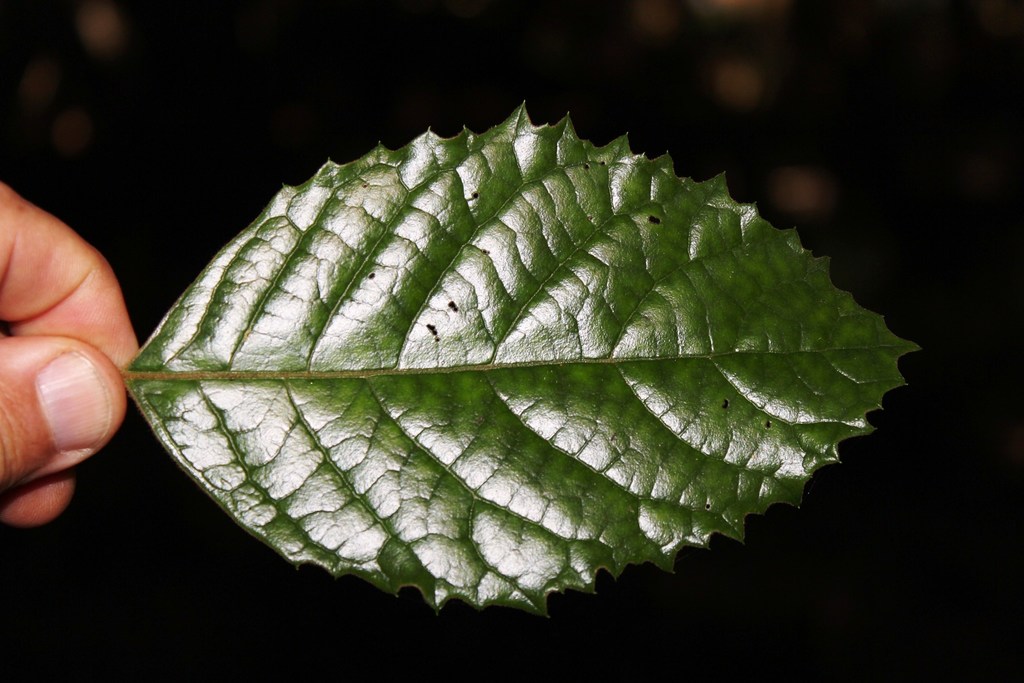
Curtisia dentata
- Origin
- Africa
- Part used
- See detailed notebook
- Tradition
- Traditional ethnobotany
The assegai tree, or Curtisia dentata, is a tree of the high-altitude forests of southern Africa, whose reddish bark and hard wood earned this species a special place in Zulu and Xhosa traditions. Prized for the strength of its wood, long carved into tool handles and assegai spears, it was also consulted by traditional healers for various bark-based preparations. Now threatened by overexploitation, it remains held in particular respect among South African traditional medicine practitioners.
Traditional uses
Digestive troubles and diarrhea
The bark was traditionally made into a decoction to ease intestinal troubles and diarrhea, according to uses reported among Zulu healers.
Pain and rheumatic conditions
Bark-based preparations were used traditionally against joint and muscle pain.
Care of wounds and skin conditions
Crushed bark or a decoction traditionally served to wash wounds and certain skin conditions.
Support during pregnancy
In certain South African traditions, bark-based preparations were used around pregnancy and childbirth, a use to be approached with great caution today.
What to know before use
A species classified as vulnerable in South Africa due to overexploitation of its bark; its harvesting raises a major conservation concern. A traditional use poorly documented scientifically: not to be used without the advice of a health professional or a qualified practitioner. To be strictly avoided during pregnancy and breastfeeding, as certain traditional uses are linked to unverified and potentially risky uterine properties. Not suitable for self-medication: no reliable dosage has been established, and interactions or adverse effects cannot be excluded.
The detailed notebook
- Prepared as a paste or decoction
- Traditional duration of use
- Known contraindications
- Related species and their uses
Where to find it
Partner herbalists — available with the detailed notebook.
Sources
PFAF