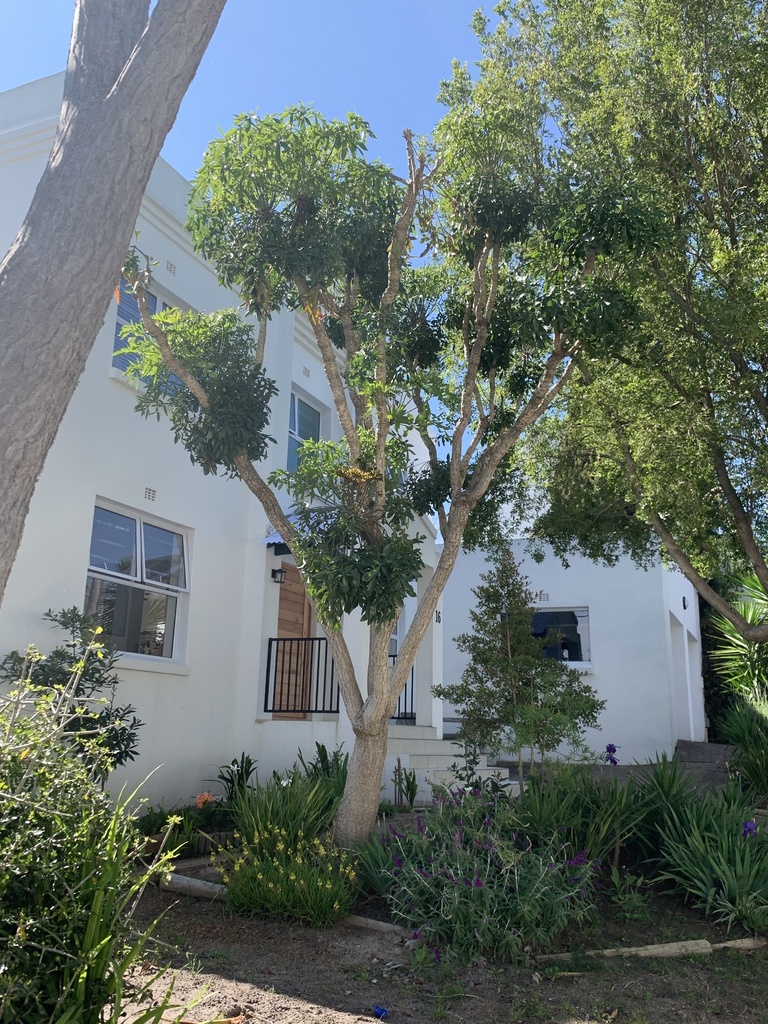
Cussonia spicata
- Origin
- Africa
- Part used
- See detailed notebook
- Tradition
- Traditional ethnobotany
Cussonia spicata, a candelabra-shaped tree recognizable by its broad palmate leaves, graces the savannas and wooded margins of southern and eastern Africa. Known locally as the "cabbage tree," it holds a discreet but long-standing place in the folk pharmacopeias of several South African peoples. Its bark and roots, in particular, have long been entrusted to family infusions and decoctions.
Traditional uses
Traditional digestive support
The bark was traditionally infused or decocted to ease common digestive troubles such as stomach aches and bloating.
Use against intestinal worms
In certain South African traditions, root- or bark-based preparations were used empirically as a folk vermifuge.
Traditional wound care
Crushed bark or a poultice was reportedly applied locally to certain skin conditions, according to orally transmitted uses.
Easing diffuse pain
Bark decoctions were sometimes traditionally used to relieve general or joint pain, without consolidated scientific documentation.
What to know before use
A traditional use poorly documented scientifically: caution is advised, and the advice of a health professional is recommended before any use. Avoid in pregnant or breastfeeding women, for lack of sufficient safety data. Do not give to young children without medical advice. Do not exceed occasional use and avoid any prolonged intake without supervision.
The detailed notebook
- Prepared as a paste or decoction
- Traditional duration of use
- Known contraindications
- Related species and their uses
Where to find it
Partner herbalists — available with the detailed notebook.
Sources
PFAF, Wikipedia