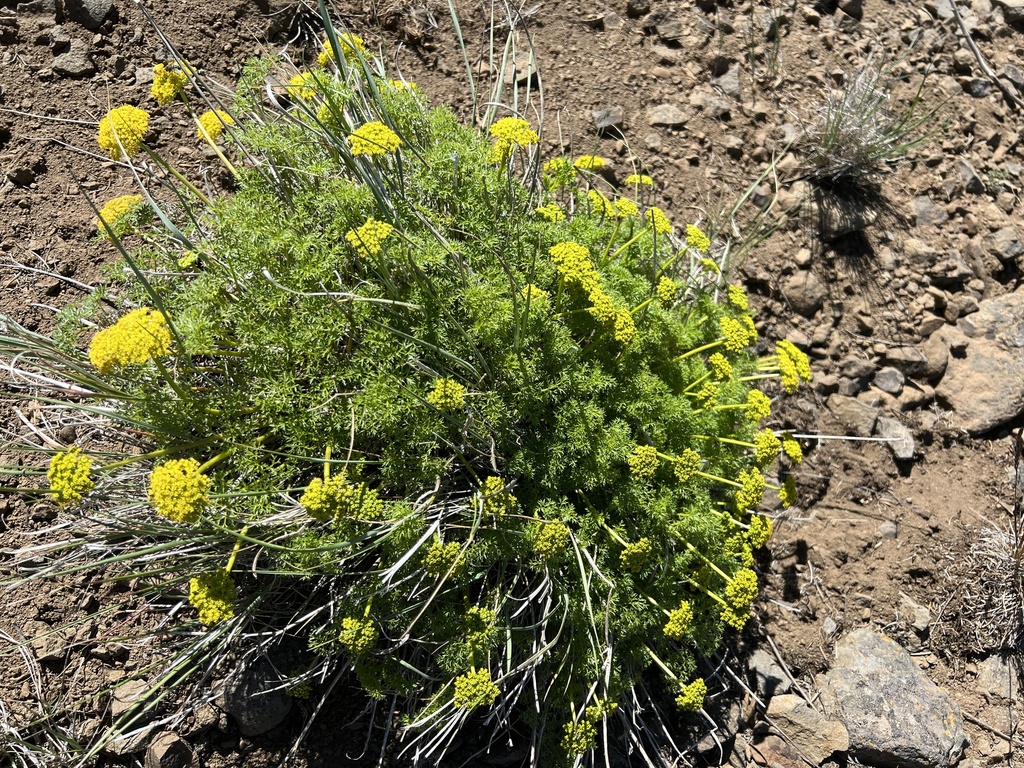
Cymopterus terebinthinus
- Origin
- North America
- Part used
- See detailed notebook
- Tradition
- Traditional ethnobotany
Cymopterus terebinthinus, a humble umbellifer of the arid lands of the American West, was known to the Indigenous peoples of the Great Basin and Plateau for its aromatic roots and resinous foliage. Its very name recalls the scent of turpentine released when its leaves are crushed, an olfactory signature long used to identify it among the other plants of the desert. Shoshone, Paiute, and other traditions of the region report both food and healing uses.
Traditional uses
Traditional support for the airways
The dried roots, ground into powder or infused, were traditionally used to soothe coughs and congestion, in the manner of other aromatic desert umbellifers.
An occasional digestive use
A light root decoction was sometimes taken to relieve digestive discomfort, according to uses reported among certain Great Basin peoples.
External application to the skin
The crushed root or a poultice of it was applied locally for its reported soothing properties on irritated or lightly wounded skin.
Edible root and leaves
The young leaves and roots, once cooked, were part of the traditional diet of certain Indigenous peoples, the plant being prized for its pronounced resinous fragrance.
Before you use it
This plant belongs to the carrot family (Apiaceae), which includes wild species that are sometimes toxic and easily confused with one another: certain botanical identification is essential before any harvesting or use. Documentation on internal uses remains limited and poorly standardized; the advice of a health professional or an experienced herbalist is recommended before any use. To be avoided in pregnant or breastfeeding women, as well as in young children, as a precaution due to the lack of data. Do not confuse with other similar-looking wild umbellifers, some of which are deadly (e.g. hemlocks), due to the similarity of the foliage and umbels.
The detailed notebook
- Prepared as a paste or decoction
- Traditional duration of use
- Known contraindications
- Related species and their uses
Where to find it
Partner herbalists — available with the detailed notebook.
Sources
PFAF