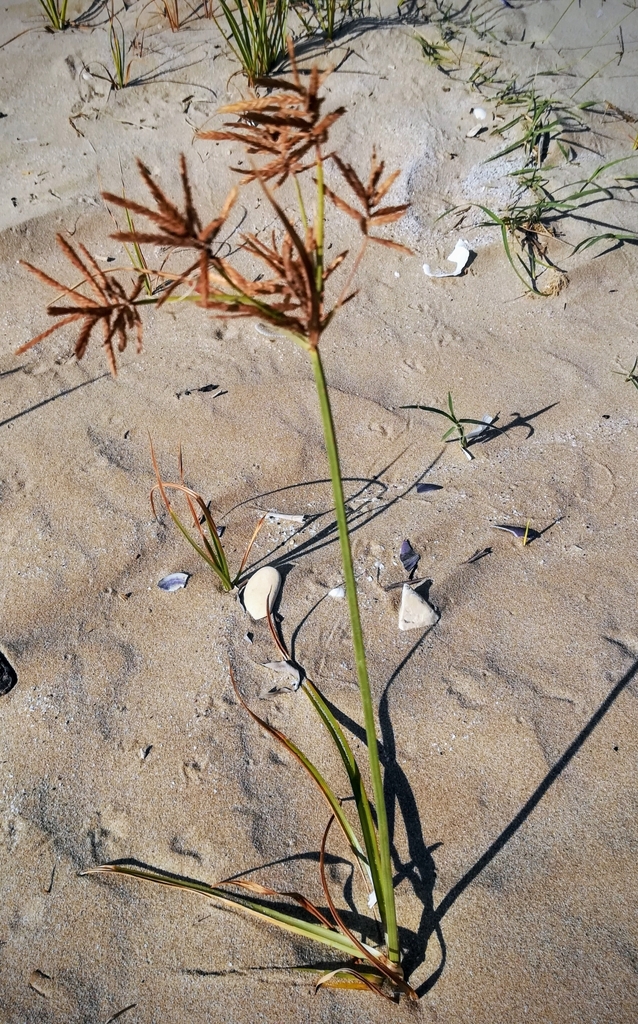
Cyperus rotundus
- Origin
- Europe
- Part used
- Root
- Tradition
- Traditional ethnobotany
Purple nutsedge, also known as Cyperus rotundus, is a perennial herb of damp places, long known to herbalists for its fragrant tuberous root. Traditionally used in Asia and the Mediterranean basin, it holds a discreet but ancient place in the herbal records concerning digestive and women's ailments.
Traditional uses
Digestive support
The dried root was traditionally brewed as a tea to ease digestive discomfort, bloating, and heaviness after meals.
Comfort during the menstrual cycle
In certain Asian traditions, the tuber was used to help with irregularities in the menstrual cycle and associated discomfort.
Use for fever
The roots were sometimes used as a decoction to help with mild feverish states, according to old folk uses.
A soothing local application
Root powder, mixed with water or an oil, was applied as a poultice to certain skin irritations in folk tradition.
Before you use it
Not advised during pregnancy due to a traditional use linked to the menstrual cycle, which suggests a possible action on the uterus. To be avoided during breastfeeding as a precaution, for lack of sufficient data. Do not use without the advice of a healthcare professional if taking medication, particularly anticoagulants. Prolonged or high-dose use is not documented as safe; favor occasional, moderate use.
The detailed notebook
- Prepared as a paste or decoction
- Traditional duration of use
- Known contraindications
- Related species and their uses
Where to find it
Partner herbalists — available with the detailed notebook.
Sources
PFAF, Wikipedia