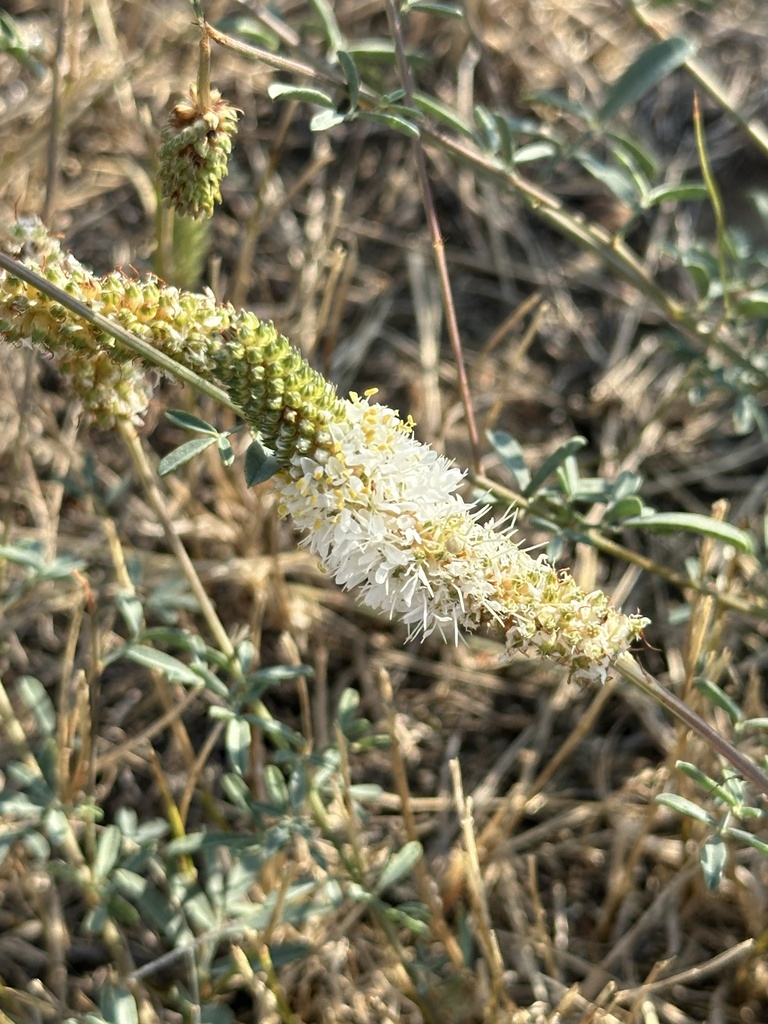
Dalea candida
- Origin
- North America
- Part used
- See detailed notebook
- Tradition
- Traditional ethnobotany
On the plains and dry prairies of North America, Dalea candida, also called "white prairie clover," was known to Amerindian peoples of the Great Plains, notably the Pawnee, Lakota, and Kiowa nations. This small legume with its discreet spikes of white flowers held a modest but real place in local traditional pharmacopoeia, often associated with the care of wounds and common ailments.
Traditional uses
Support during colds
The root and aerial parts were traditionally infused to accompany bouts of cold, according to uses reported among several Plains nations.
Care of minor wounds
A preparation of crushed root or leaves was applied as a poultice to small cuts and skin irritations, as part of traditional household care.
Mild digestive relief
An infusion of the aerial parts was sometimes drunk to accompany minor digestive discomfort, according to the oral tradition of certain communities.
A plant associated with smudging
Among certain Plains peoples, the dried plant was included in mixtures intended for ceremonial smudging, a use more symbolic than strictly therapeutic.
Before you use it
Traditional uses of this plant remain poorly documented scientifically; caution is advised and professional guidance is recommended before any use. Avoid use in pregnant or breastfeeding women, for lack of sufficient safety data. Do not use in children without the advice of a health professional. This entry has a historical and informational purpose; it in no way replaces a medical consultation.
The detailed notebook
- Prepared as a paste or decoction
- Traditional duration of use
- Known contraindications
- Related species and their uses
Where to find it
Partner herbalists — available with the detailed notebook.
Sources
PFAF, Wikipedia