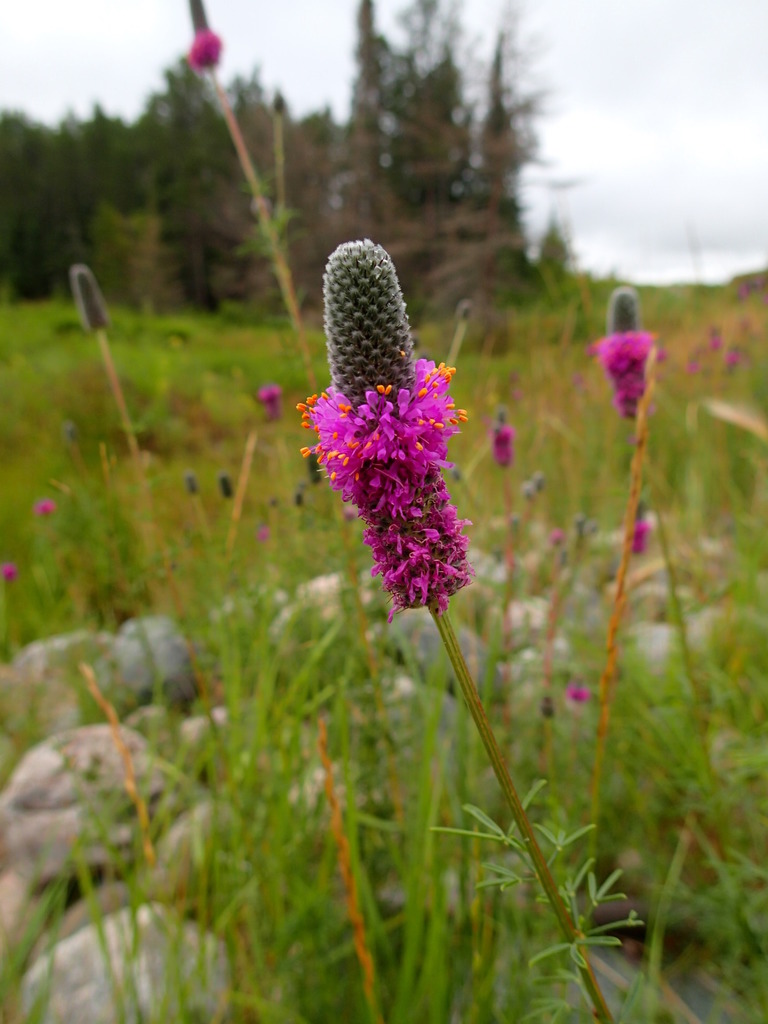
Dalea purpurea
- Origin
- North America
- Part used
- See detailed notebook
- Tradition
- Traditional ethnobotany
On the great prairies of North America, purple prairie clover once displayed its purplish spikes among the tall grasses. The Plains peoples knew it well, both for its virtues and for its role in the everyday uses of camp life. Even today, this unassuming plant evokes botanical knowledge passed down from generation to generation.
Traditional uses
Traditional digestive support
The roots and aerial parts were traditionally infused to accompany difficult digestion, according to uses reported among certain Plains nations.
Care of minor wounds
A preparation of crushed root or leaves was used locally to soothe minor skin irritation or to help keep a superficial wound clean.
Soothing the airways
A light decoction of parts of the plant is said to have been traditionally used to relieve coughing and an irritated throat, as part of common Plains remedies.
A forage and bee plant
Beyond its internal uses, purple prairie clover was also valued as a forage plant for livestock and as a resource for pollinators, a sign of its place in the life of the prairies.
Before you use it
Traditional use is poorly documented by modern research: caution remains advisable, particularly regarding duration and frequency of use. Avoid in pregnant or breastfeeding women for lack of data. Do not use in young children without the advice of a health professional. If in doubt or under ongoing medication, seek the advice of a qualified professional before any use.
The detailed notebook
- Prepared as a paste or decoction
- Traditional duration of use
- Known contraindications
- Related species and their uses
Where to find it
Partner herbalists — available with the detailed notebook.
Sources
PFAF