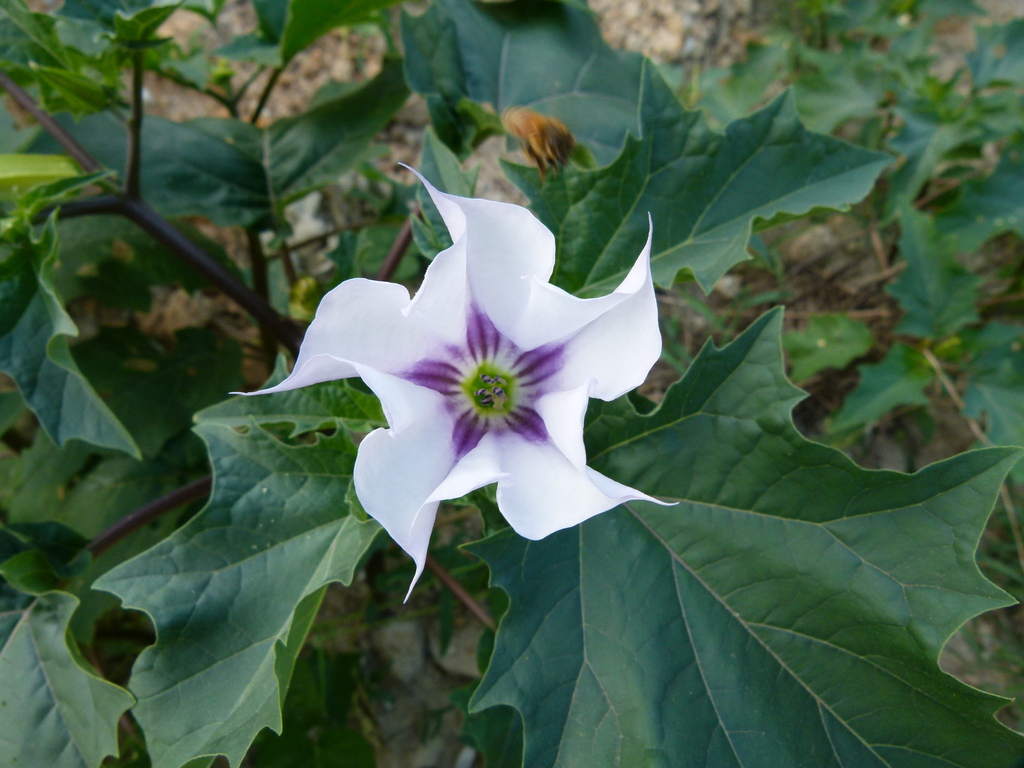
Datura stramonium
- Origin
- North America
- Part used
- Seeds/fruits
- Tradition
- Traditional ethnobotany
Datura stramonium, also called "witches' weed" or "thorn apple," was both feared and coveted by the healers of old. Native to North America, this plant with its trumpet flower and spine-covered fruit occupies an ambivalent place in old herbalist notebooks, between remedy and poison. Its use, extremely delicate, belongs more to the history of traditional practices than to a household use recommended today.
Traditional uses
A poultice for joint pain
The crushed seeds were traditionally used externally, as a poultice, to relieve rheumatic and joint pain.
Old fumigations for asthma
Dried then smoked or burned as a fumigation, datura leaves and seeds were historically used in an attempt to relieve asthma attacks, a practice now abandoned because of its danger.
External use for neuralgia
Preparations of seeds infused in a fatty base were once used in local application to soothe certain nerve pains or neuralgia.
Applications for skin conditions
In certain folk traditions, external preparations of datura were applied to the skin for localized conditions, always strictly as an external and limited use.
Before you use it
Datura stramonium is a highly toxic plant, containing tropane alkaloids (atropine, scopolamine, hyoscyamine) that can cause severe poisoning, hallucinations, cardiac disturbances, and even death, even at low doses. Any use, internal or external, must imperatively be supervised by a health professional or a qualified herbalist; self-medication is strongly discouraged. This plant is strictly prohibited for pregnant or breastfeeding women, for children, and in cases of heart disease, glaucoma, or neurological disorders. Never ingest in any form without medical advice; the margin between a traditional dose and a toxic dose is extremely narrow.
The detailed notebook
- Prepared as a paste or decoction
- Traditional duration of use
- Known contraindications
- Related species and their uses
Where to find it
Partner herbalists — available with the detailed notebook.
Sources
Wikipedia