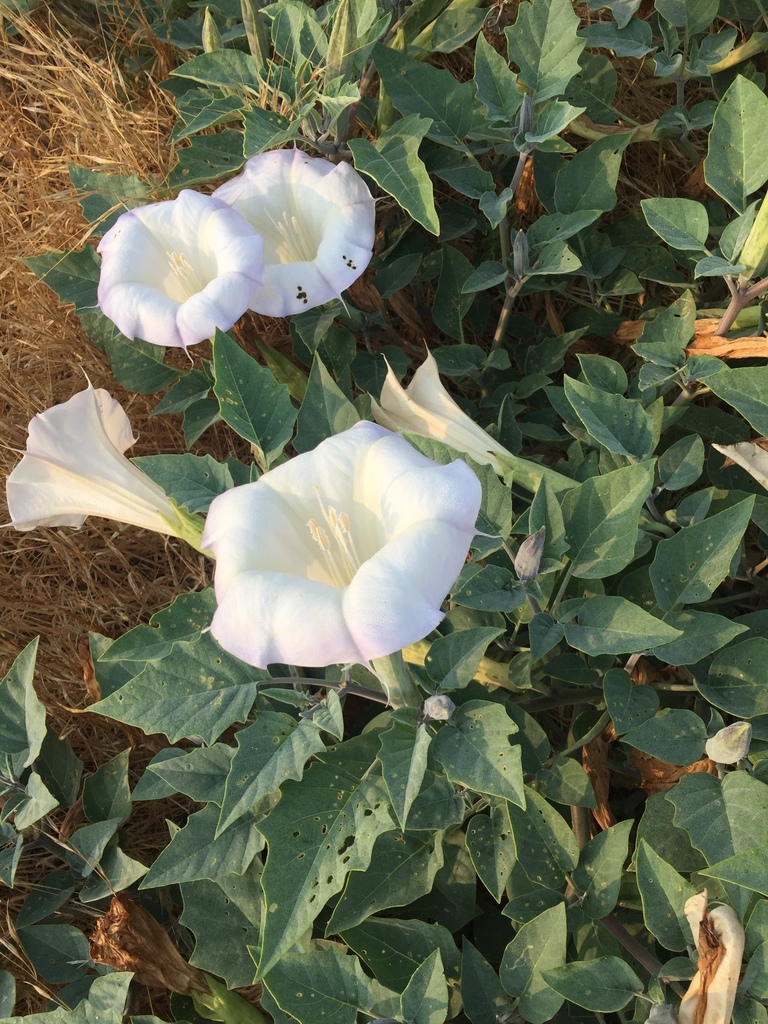
Datura wrightii
- Origin
- North America
- Part used
- Root
- Tradition
- Traditional ethnobotany
Datura wrightii, a large nightshade with white trumpet-shaped flowers, grows in the arid lands of the North American Southwest. The Indigenous peoples of the region — notably the Chumash, the Tongva, and various groups of the Sonoran Desert — considered it a sacred plant, reserved for ritual and ceremonial uses strictly overseen by elders and healers.
Traditional uses
A plant of rites of passage
The root of Datura wrightii was traditionally used by certain Indigenous peoples during initiatory ceremonies, notably to mark the passage into adulthood, under the exclusive guidance of a shaman or elder who knew the dosages.
External application for pain
In traditional external use, poultices of crushed root or leaf are said to have been applied to bruises, sprains, or joint pain to soothe the area locally.
Traditional care of animals
Some ethnobotanical sources report the occasional use of preparations based on Datura to treat domestic animals, always applied externally and in very small amounts.
Traditional treatment of stings
The plant is said to have been used as a poultice on insect or scorpion stings in certain traditions of the Sonoran Desert, alongside other plant remedies.
Before you use it
All parts of the plant, particularly the root, contain highly toxic tropane alkaloids (scopolamine, atropine, hyoscyamine), even at low doses. Ingestion can cause severe cardiac disturbances, uncontrolled hallucinations, coma, or even death; many cases of accidental poisoning are documented. Formally discouraged for pregnant or breastfeeding women, children, and those on ongoing medication (risk of interaction with cardiac, psychotropic, or anticholinergic treatments). Never prepare or consume this plant without expert supervision: its toxicity varies greatly with soil, season, and the individual plant, making any home dosing dangerous.
The detailed notebook
- Prepared as a paste or decoction
- Traditional duration of use
- Known contraindications
- Related species and their uses
Where to find it
Partner herbalists — available with the detailed notebook.
Sources
Wikipedia