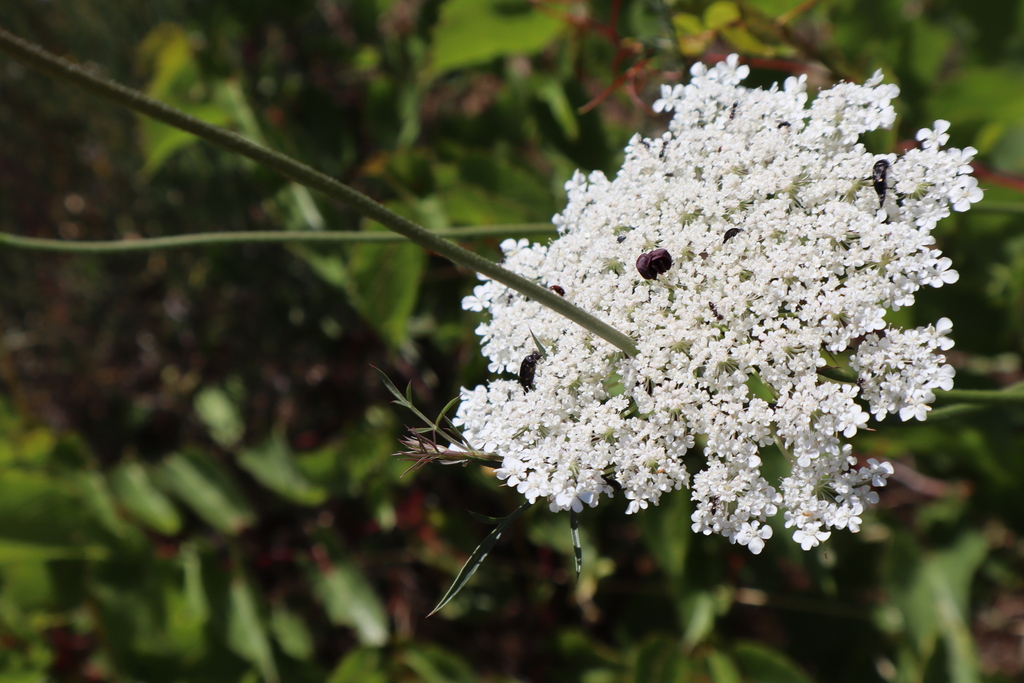
Daucus carota
- Origin
- Europe
- Part used
- Flowers
- Tradition
- Traditional ethnobotany
Wild carrot, a humble cousin of our garden carrot, has long graced the embankments and paths of Europe with its white umbels. Old-time herbalists were particularly interested in its flowers, harvested at the height of summer, for uses geared toward women's comfort and digestion. It is said that a single small purple floret at the center of the umbel once distinguished the true plant from its less trustworthy cousins.
Traditional uses
Traditional support for the menstrual cycle
Wild carrot flowers were traditionally brewed as a tea and used to help with menstrual cycles, a use reported since antiquity in the records of European herbalists.
Digestive comfort after meals
As a light infusion, the flower was used to support sluggish digestion and calm bloating, in the manner of other aromatic garden umbellifers.
Traditional support for the urinary tract
Folk tradition attributed to the wild carrot flower virtues that promoted urinary comfort, in the same vein as other local diuretic plants.
A soothing external use
Certain rural practices report the use of the flower as a compress to soothe irritated skin, though this use is less documented than the previous ones.
Before you use it
A use traditionally associated with emmenagogue properties: to be strictly avoided during pregnancy or when trying to conceive. Do not confuse with other toxic wild umbellifers (poison hemlock, hemlock water dropwort): certain botanical identification is essential before any harvesting. Seek the advice of a healthcare professional before any prolonged use, particularly in cases of hormonal treatment or kidney disease. Not advised in children or breastfeeding women, for lack of sufficient data.
The detailed notebook
- Prepared as a paste or decoction
- Traditional duration of use
- Known contraindications
- Related species and their uses
Where to find it
Partner herbalists — available with the detailed notebook.
Sources
PFAF, Wikipedia