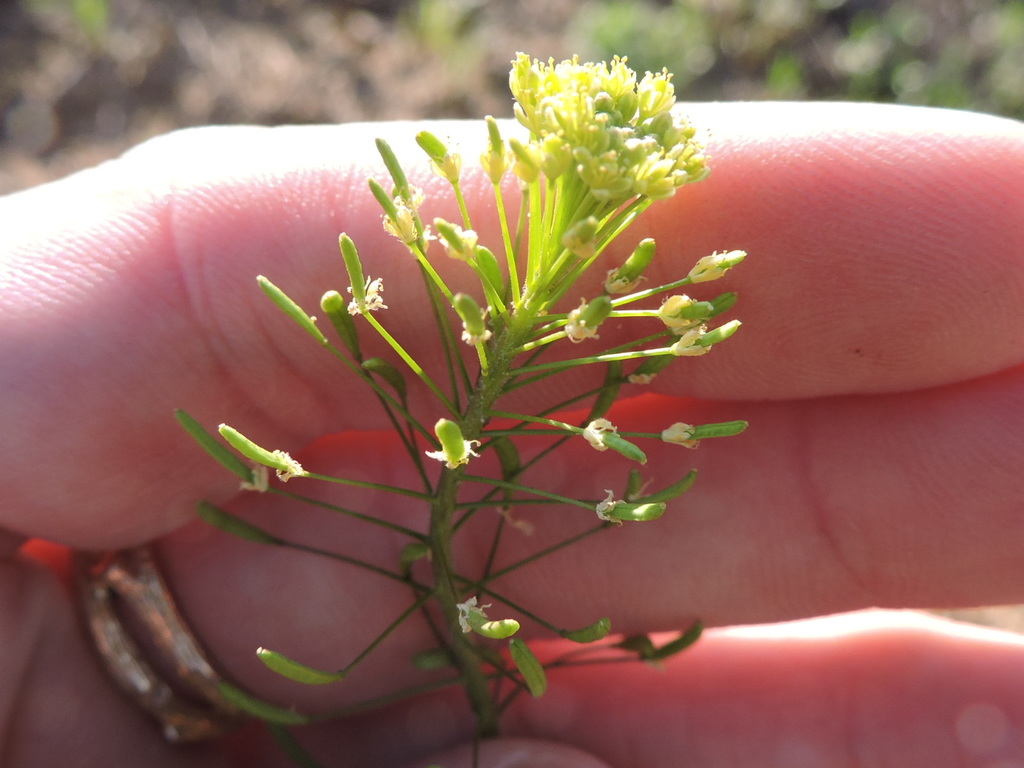
Descurainia pinnata
- Origin
- North America
- Part used
- See detailed notebook
- Tradition
- Traditional ethnobotany
A discreet herb of dry lands and neglected paths, tansy mustard accompanied the Indigenous peoples of North America for generations, both on the plate and in the family pharmacopoeia. Its small mucilaginous seeds and finely divided foliage made it a humble but valuable resource of arid areas.
Traditional uses
Seeds as a poultice or digestive decoction
The seeds, which become mucilaginous in contact with water, were traditionally used by certain Indigenous peoples to soothe digestive troubles and stomach pain.
Leaves infused for cough
An infusion of leaves was traditionally used against coughing and mild respiratory ailments.
Poultice for wounds and irritations
The crushed leaves or the mucilage of the seeds were used externally to soothe skin irritation and promote the healing of small wounds.
Seeds as a survival food
Ground into flour, the seeds provided a valued supplementary food in arid regions, particularly in times of scarcity.
Before you use it
This plant belongs to the Brassicaceae family and, like other members of this family, can accumulate nitrates or potentially toxic compounds at high doses, particularly on wilted plants or in large quantities for livestock: caution is advised for repeated human use. Internal use is discouraged for pregnant or breastfeeding women as well as young children, for lack of sufficient safety data. Reported traditional uses remain poorly documented scientifically; it is recommended to consult a health professional or an experienced herbalist before any internal use. Careful botanical identification is essential before any harvesting, as this plant can be confused with other wild Brassicaceae.
The detailed notebook
- Prepared as a paste or decoction
- Traditional duration of use
- Known contraindications
- Related species and their uses
Where to find it
Partner herbalists — available with the detailed notebook.
Sources
PFAF