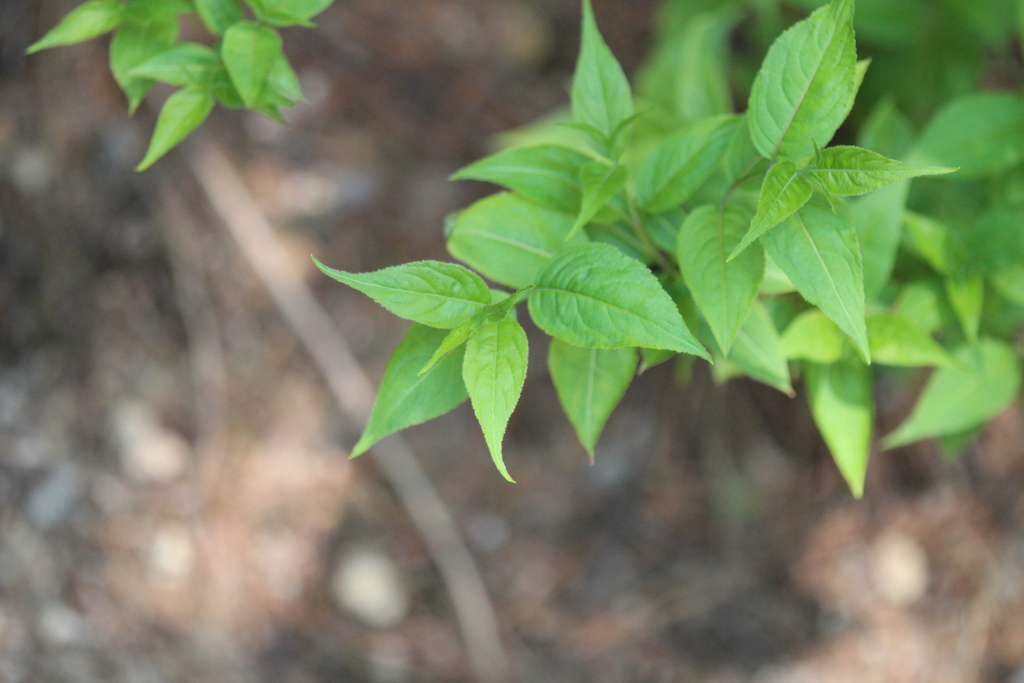
Diervilla lonicera
- Origin
- North America
- Part used
- Leaves, Root, Stem
- Tradition
- Traditional ethnobotany
Diervilla lonicera, a quiet shrub of North American woods and clearings, was well known to Indigenous traditional herbalists, who drew from it a remedy valued for the skin and to support a tired body. It was sometimes called "bush honeysuckle" for its small yellow flowers, but it was above all its leaves, stem, and root that earned it its reputation as a useful everyday plant.
Traditional uses
Soothing skin irritations
A decoction of leaves and stem was traditionally applied as a wash or compress to itching, rashes, and minor skin irritation.
Traditional digestive support
A light infusion of leaves was sometimes drunk to accompany difficult digestion, according to uses reported by certain Indigenous communities.
A traditional tonic for the body
The root, prepared as a decoction, was considered a general tonic, used to support the body during periods of fatigue.
Traditional use for the urinary tract
Some traditions report the plant's use in support of urinary comfort, although this use remains less widely documented.
Before you use it
Traditional use is poorly documented by modern research: caution remains advisable, particularly regarding duration and frequency of use. Not recommended for pregnant or breastfeeding women, for lack of sufficient data. Avoid in young children. If in doubt, under ongoing treatment, or with a chronic condition, seek the advice of a health professional before any use.
The detailed notebook
- Prepared as a paste or decoction
- Traditional duration of use
- Known contraindications
- Related species and their uses
Where to find it
Partner herbalists — available with the detailed notebook.
Sources
Wikipedia