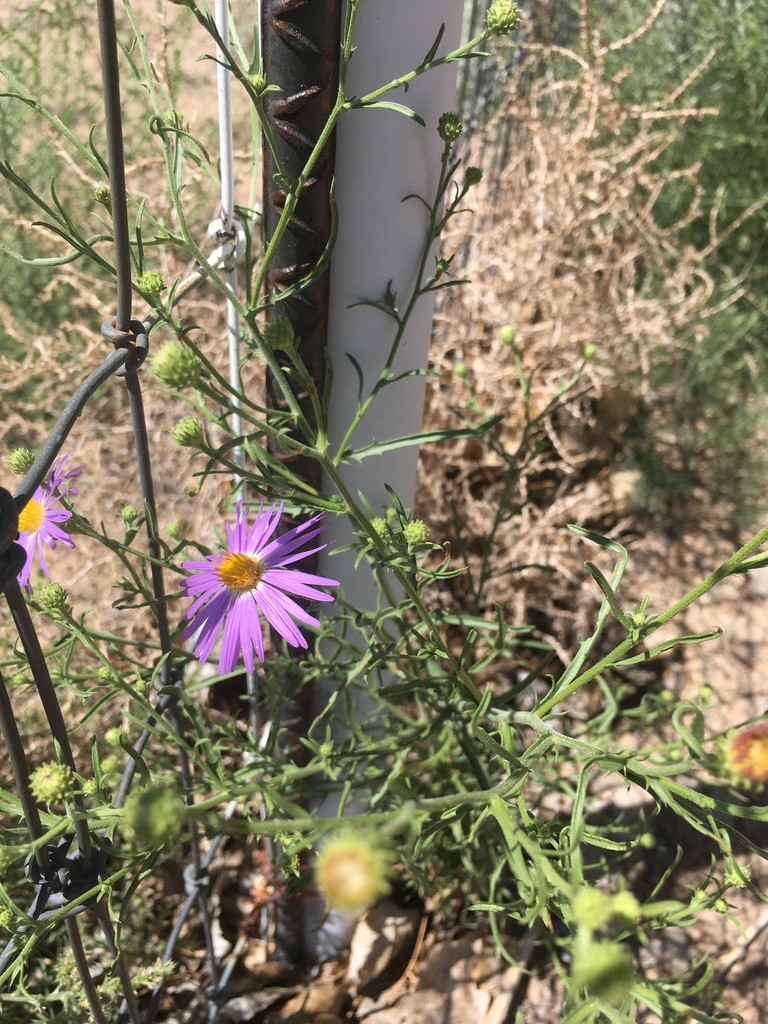
Dieteria canescens
- Origin
- North America
- Part used
- Whole plant
- Tradition
- Traditional ethnobotany
Among the plants of the arid lands of North America, Dieteria canescens — also called hoary aster — holds a discreet place in the knowledge of the desert and high-plains Indigenous peoples. Its grayish stems and mauve flowers marked traditional gathering, passed down more through oral tradition than recorded in the great treatises of Western herbalism.
Traditional uses
Traditional fumigation for the airways
The dried plant was sometimes burned or infused by certain Amerindian communities to accompany respiratory ailments, in a use as much ritual as domestic.
External use for skin irritation
A poultice or wash prepared from the whole plant was traditionally applied to the skin to soothe certain superficial irritation.
Traditional relief of diffuse pain
Certain desert-region tribes used a decoction of the whole plant applied locally to accompany muscular or joint pain.
A plant associated with ceremonial practices
Beyond its physical use, this aster figured in certain purification rites, its characteristic scent being sought for ceremonial fumigation.
Before you use it
Traditional use is poorly documented scientifically: seek the advice of a health professional before any use. Avoid any prolonged or unsupervised internal use, for lack of sufficient data on potential toxicity. Not recommended for pregnant or breastfeeding women, nor for young children. Some Asteraceae species can cause allergic skin or respiratory reactions in sensitive individuals.
The detailed notebook
- Prepared as a paste or decoction
- Traditional duration of use
- Known contraindications
- Related species and their uses
Where to find it
Partner herbalists — available with the detailed notebook.
Sources
PFAF, Wikipedia