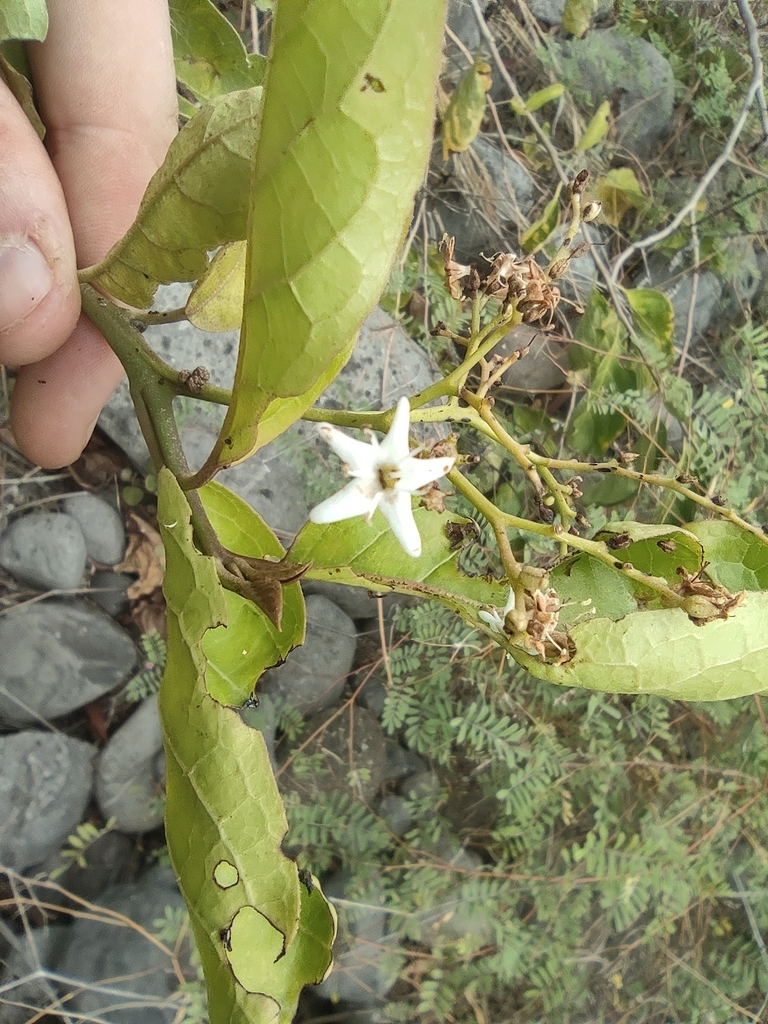
Ehretia cymosa
- Origin
- Africa
- Part used
- See detailed notebook
- Tradition
- Traditional ethnobotany
A shrub of the margins and wooded savannas of tropical Africa, Ehretia cymosa has long been known in village pharmacopeias, where its leaves and bark feature in many family preparations. From the Guinea coast to East Africa, it is credited with soothing and purifying properties, passed down from generation to generation by traditional healers. Its use, which has remained mostly local and oral, deserves to be reported with the caution required by still incomplete scientific documentation.
Traditional uses
Common digestive troubles
Leaf or bark decoctions are traditionally drunk to calm stomach pain and passing digestive troubles in several sub-Saharan African regions.
Respiratory conditions and coughing
The bark and leaves are used in traditional medicine to relieve coughing and certain respiratory discomforts.
Care of wounds and skin conditions
Preparations made from crushed leaves or bark are applied locally to wounds, skin diseases, and skin conditions according to customary uses.
Fevers and diffuse pain
The plant is among the traditional remedies used against feverish states and various pains, often combined with other local plants.
What to know before use
A traditional use still poorly documented scientifically: seek the advice of a health professional before any use, particularly prolonged use. Avoid use in pregnant or breastfeeding women, for lack of sufficient safety data. Do not give to young children without the supervision of a knowledgeable person or practitioner. Keep to moderate, occasional doses; prolonged or highly concentrated use is not recommended without medical advice.
The detailed notebook
- Prepared as a paste or decoction
- Traditional duration of use
- Known contraindications
- Related species and their uses
Where to find it
Partner herbalists — available with the detailed notebook.
Sources
PFAF