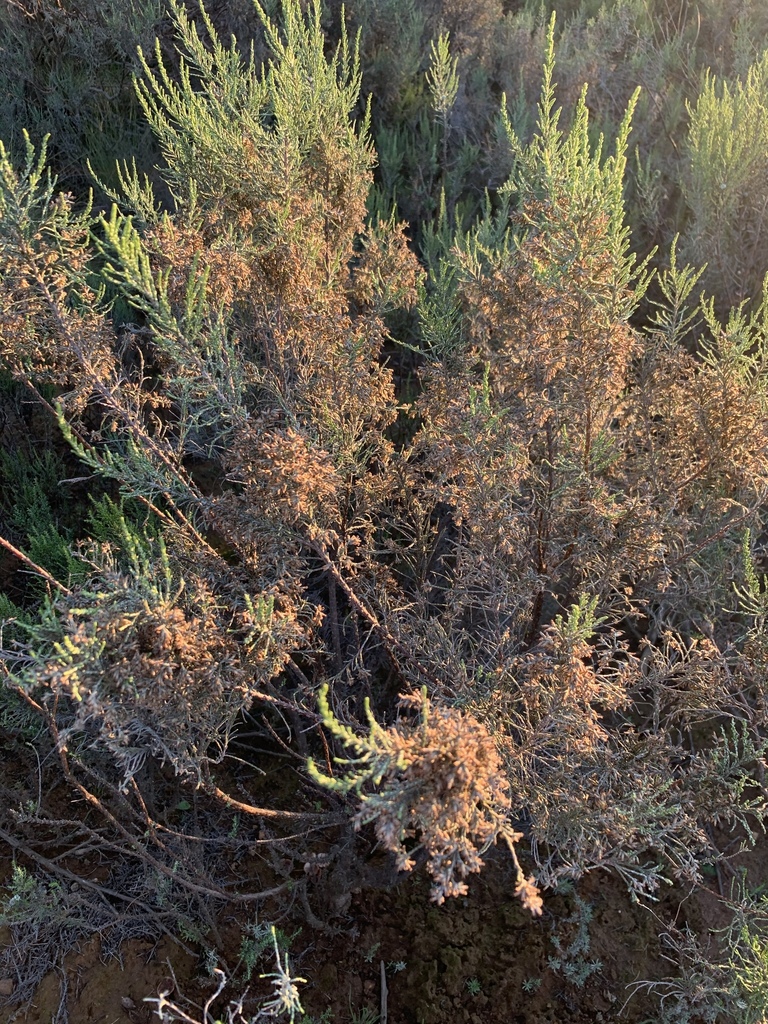
Elytropappus rhinocerotis
- Origin
- Africa
- Part used
- See detailed notebook
- Tradition
- Traditional ethnobotany
Known at the Cape as "renosterbos," the shrub that gave its name to the Renosterveld lands has long accompanied the folk remedies of the peoples of southern Africa. Its hard wood and gray-green foliage, discreet in the semi-arid landscape, conceal a tradition of uses passed down orally far more than in writing.
Traditional uses
Traditional bitter for digestion
The very bitter twigs and leaves were traditionally infused in small amounts to support sluggish digestion, in the manner of other South African bitter plants.
Folk use against feverish states
In the folk pharmacopeia of the Cape, a light decoction was sometimes used to help with feverish states and seasonal colds.
Skin washes and compresses
Washes made from a diluted decoction have been reported in certain local traditions for the care of irritated skin.
Folk remedy for livestock
Herders of the Karoo and Renosterveld are said to have traditionally used the plant, particularly for digestive troubles in livestock, though this use remains poorly documented scientifically.
What to know before use
A very bitter plant whose chemical composition remains little studied in detail: reserve it for occasional use in small amounts. Not recommended for pregnant or breastfeeding women, for lack of safety data. Do not use in children without the advice of a health professional. In the absence of solid scientific documentation, any prolonged internal use should be discussed with a qualified practitioner.
The detailed notebook
- Prepared as a paste or decoction
- Traditional duration of use
- Known contraindications
- Related species and their uses
Where to find it
Partner herbalists — available with the detailed notebook.
Sources
PFAF