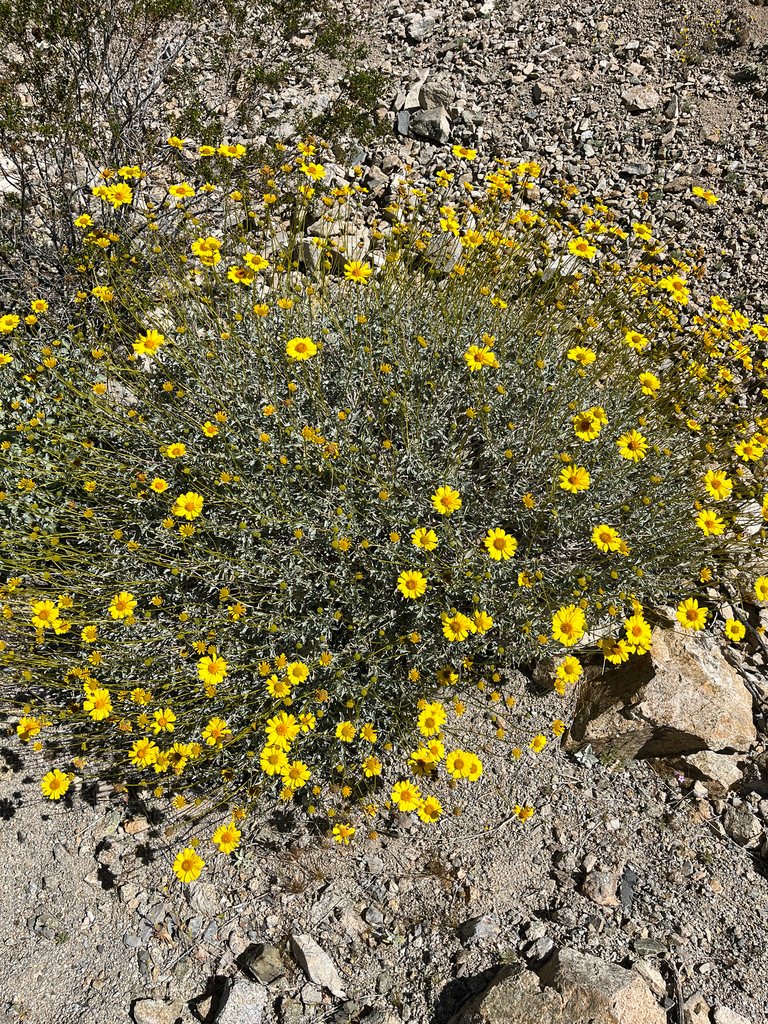
Encelia actoni
- Origin
- North America
- Part used
- See detailed notebook
- Tradition
- Traditional ethnobotany
A quiet shrub of the arid stretches of the American Southwest, Encelia actoni grows on the rocky slopes of the Mojave Desert and neighboring regions. The Amerindian peoples of these lands, notably the Cahuilla and other Great Basin groups, knew this resinous plant for a few occasional uses, passed down orally from generation to generation. Its place in herbalist traditions nonetheless remains modest and poorly documented in writing.
Traditional uses
Application to minor wounds
The sticky resin exuded by the stems and leaves was traditionally applied to superficial wounds or skin irritation by certain Amerindian groups of the desert.
Traditional fumigation
The dried foliage of certain Encelia species was sometimes burned as a fumigation, a practice reported quite generally among several resinous plants of the North American desert.
An empirical use against pain
An empirical use as a poultice, to relieve certain localized pain, is mentioned in a few regional ethnobotanical sources, without a detailed description of the exact methods.
Before you use it
The traditional uses of this plant are poorly documented scientifically; caution is warranted before any use. Do not ingest without the advice of a qualified professional, as the chemical composition of the resin is not well characterized. Avoid any use in pregnant or breastfeeding women and young children, as a precaution. For skin application, test beforehand on a small area to rule out any risk of allergic reaction.
The detailed notebook
- Prepared as a paste or decoction
- Traditional duration of use
- Known contraindications
- Related species and their uses
Where to find it
Partner herbalists — available with the detailed notebook.
Sources
PFAF