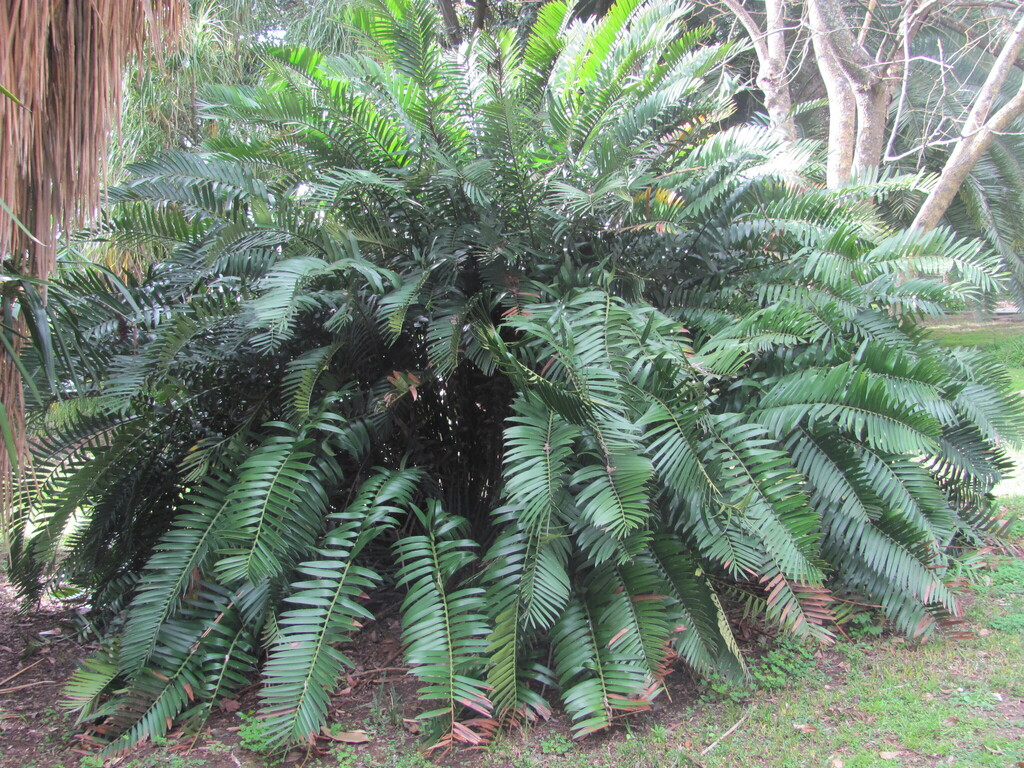
Encephalartos altensteinii
- Origin
- Africa
- Part used
- See detailed notebook
- Tradition
- Traditional ethnobotany
Encephalartos altensteinii is a cycad of southern Africa, an ancient plant of majestic bearing, from which local populations have long drawn benefit despite a feared toxicity. Revered for its prehistoric appearance, it belongs to a plant group that predates flowering plants, and its traditional use remains marginal and governed by precise processing knowledge.
Traditional uses
Starch drawn from the trunk and seeds
After a lengthy process aimed at eliminating toxins (fermentation, drying, repeated washing), the pith and seeds could be turned into a kind of starch or traditional bread among certain southern African peoples.
An emblematic, ceremonial plant
Through its longevity and ancestral appearance, the plant held a symbolic place in certain local traditions, associated with permanence and the strength of the earth.
Fibers and coverings used locally
The cone coverings and certain trunk fibers are said to have been occasionally used in making objects or everyday materials.
What to know before use
The whole plant, and especially the raw seeds, contains toxic compounds (including cycasin) that can cause severe digestive, neurological, and liver problems. Never consume without rigorous traditional preparation documented by knowledgeable practitioners; even then, a residual risk remains. A protected and regulated species in many countries due to its rarity; its harvesting and trade are strictly controlled. Not recommended under any circumstances for pregnant or breastfeeding women, children, or anyone with a fragile liver or nervous system.
The detailed notebook
- Prepared as a paste or decoction
- Traditional duration of use
- Known contraindications
- Related species and their uses
Where to find it
Partner herbalists — available with the detailed notebook.
Sources
PFAF