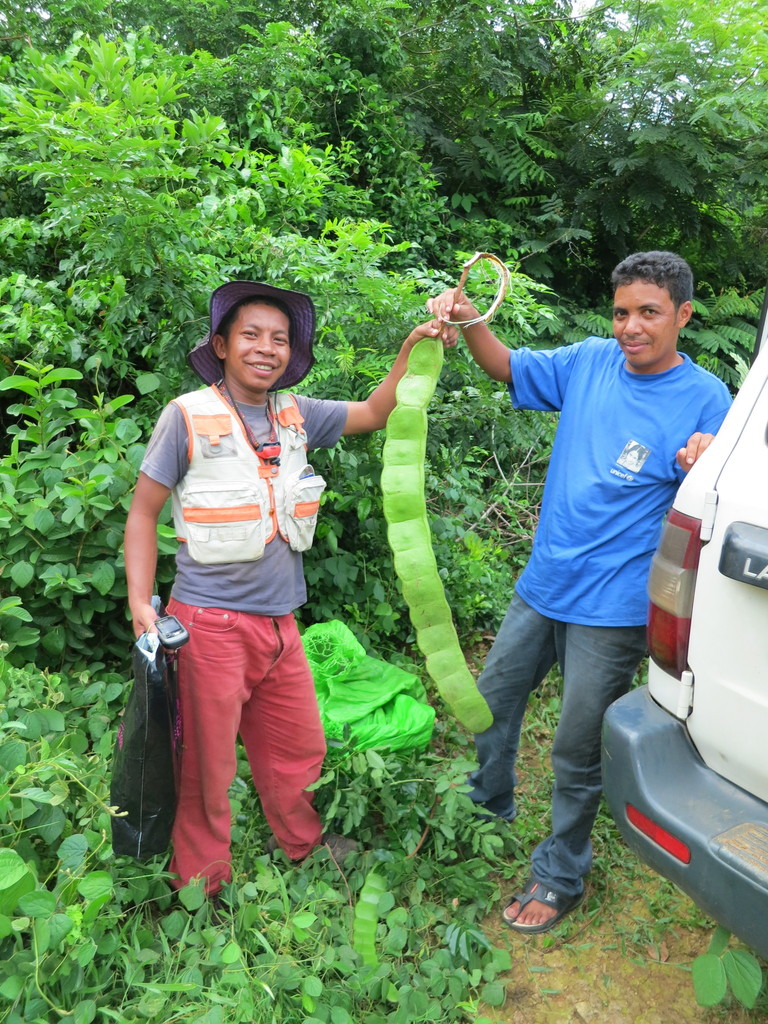
Entada rheedei
- Origin
- Africa
- Part used
- See detailed notebook
- Tradition
- Traditional ethnobotany
Entada rheedei, a giant liana of Africa's tropical forests, is recognized by its spectacular woody pods, sometimes more than a meter long, which travel on marine and river currents. Its hard seeds, sometimes called "sea beans" or "matassa seeds," have long been kept in village pharmacopeias as objects of virtue and strength. Oral tradition attributes to it a particular role in uses linked to male vigor and physical endurance.
Traditional uses
Traditional support for vigor
The bark and seeds of Entada rheedei are traditionally associated, in several West and Central African pharmacopeias, with a male tonic use and support for endurance.
Fortifying tonic for the weakened body
A bark decoction was used as a fortifying remedy for bodies weakened by work or illness, in the spirit of a general tonic rather than a targeted treatment.
External use on wounds
Some traditions report the use of bark powder or crushed seed applied externally, to promote cleanliness and healing of minor skin wounds.
Occasional use against digestive troubles
Light decoctions of the bark have been reported in certain regions as a traditional remedy for passing digestive discomfort.
What to know before use
The seeds contain saponins and other compounds whose potential toxicity is poorly characterized; poorly dosed internal use can be irritating or even dangerous, and professional advice is essential before any use. Use not recommended for pregnant or breastfeeding women, for lack of sufficient safety data. Not recommended for children, due to the lack of data and the toxic risk of the seeds. Do not combine with ongoing medication without the advice of a health professional, particularly with hormonal or cardiovascular treatments.
The detailed notebook
- Prepared as a paste or decoction
- Traditional duration of use
- Known contraindications
- Related species and their uses
Where to find it
Partner herbalists — available with the detailed notebook.
Sources
PFAF, Wikipedia