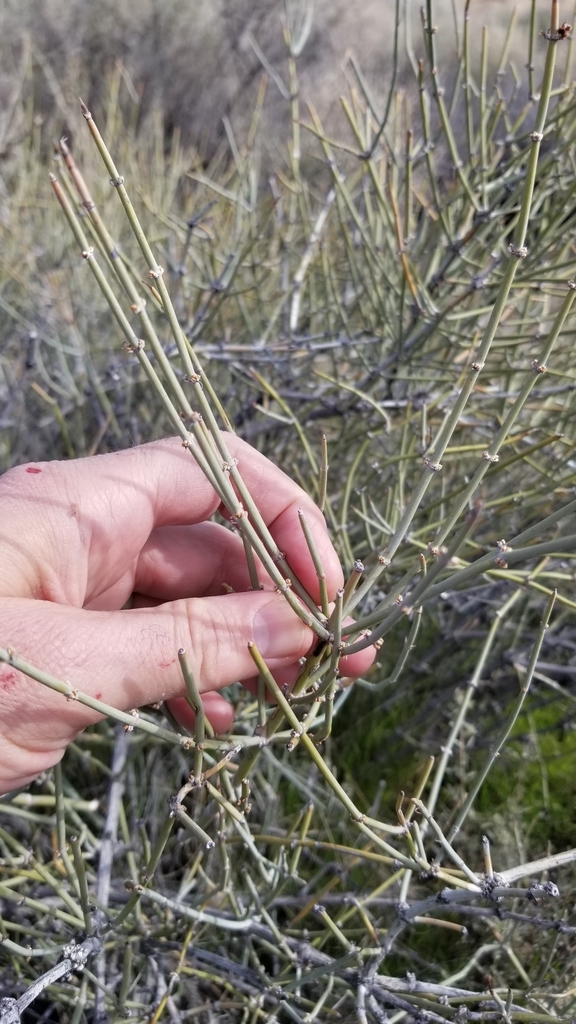
Ephedra nevadensis
- Origin
- North America
- Part used
- Root
- Tradition
- Traditional ethnobotany
Under the arid sun of the North American deserts grows a modest but hardy plant well known to the Amerindian tribes of the Great Basin. Ephedra nevadensis, a quiet cousin of the Asian ephedras but lacking their major stimulant alkaloid, was long prepared as a tea, which earned it the nickname "Mormon tea" among the settlers who came to live in these dry lands.
Traditional uses
Traditional support for the airways
The dried stems were infused by desert populations to help with colds and clear the airways, according to folk tradition.
A daily digestive tea
Mormon tea was commonly drunk as a digestive beverage after meals, in the manner of an ordinary comfort tea.
A traditional mild diuretic use
Certain communities credited this plant with an action promoting urinary elimination, as part of broader folk remedies.
A tonic drink for desert travelers
Drunk as a decoction by pioneers and travelers, it was reputed to be invigorating after exertion or a long walk.
Before you use it
Do not confuse with ephedrine-rich Ephedra species (notably Ephedra sinica), whose stimulant effects and cardiovascular risks are far more pronounced. Discouraged during pregnancy, breastfeeding, high blood pressure, heart disease, or while taking stimulant medications. Prolonged or high-dose use is not documented as safe; favor an occasional, moderate use. Seek the advice of a health professional or a qualified herbalist before any use, particularly in children.
The detailed notebook
- Prepared as a paste or decoction
- Traditional duration of use
- Known contraindications
- Related species and their uses
Where to find it
Partner herbalists — available with the detailed notebook.
Sources
PFAF, Wikipedia