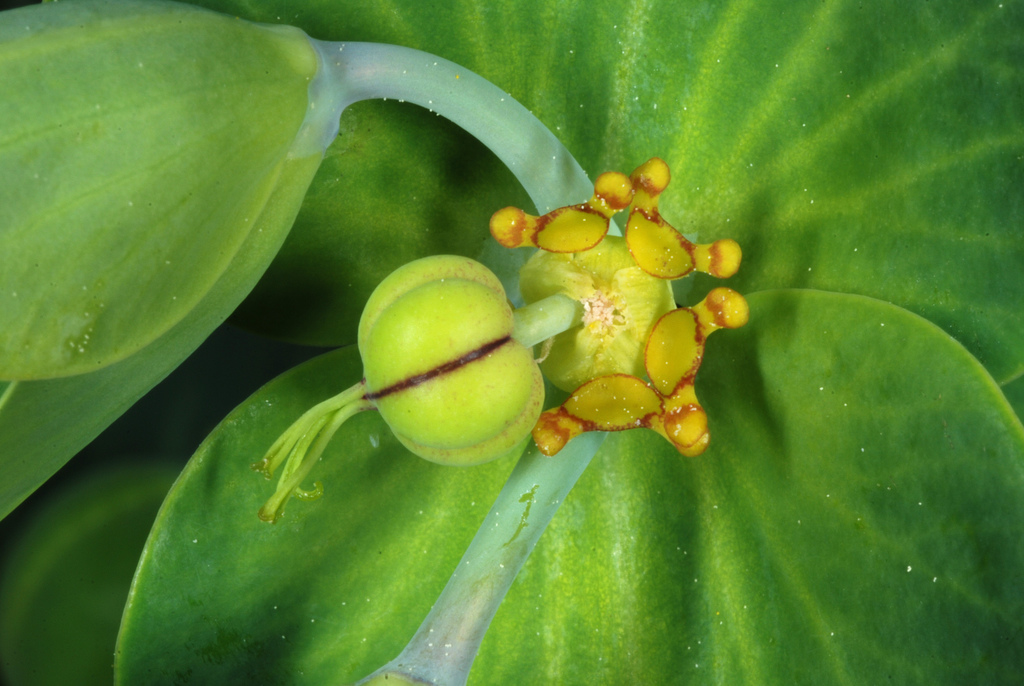
Caper spurge
- Origin
- Europe
- Part used
- See detailed notebook
- Tradition
- Traditional ethnobotany
Caper spurge, which old-time herbalists sometimes called ‘mole plant,’ grew readily along the gardens and paths of Europe, recognizable by its acrid white latex. As feared as it was used, this spurge was long associated with specific external uses, reserved for experienced hands, and with a role as a repellent plant in the garden.
Traditional uses
Before you use it
The latex is strongly irritating to the skin and mucous membranes; it must never come into contact with the eyes or be ingested. All parts of the plant, particularly the seeds, are toxic, and internal use is strictly discouraged. To be avoided during pregnancy or breastfeeding, in children, and in cases of broken or sensitive skin. Any external use should remain occasional and localized, and only be considered after the advice of a healthcare professional or experienced herbalist.
The detailed notebook
- Prepared as a paste or decoction
- Traditional duration of use
- Known contraindications
- Related species and their uses
Where to find it
Partner herbalists — available with the detailed notebook.
Sources
PFAF, Wikipedia