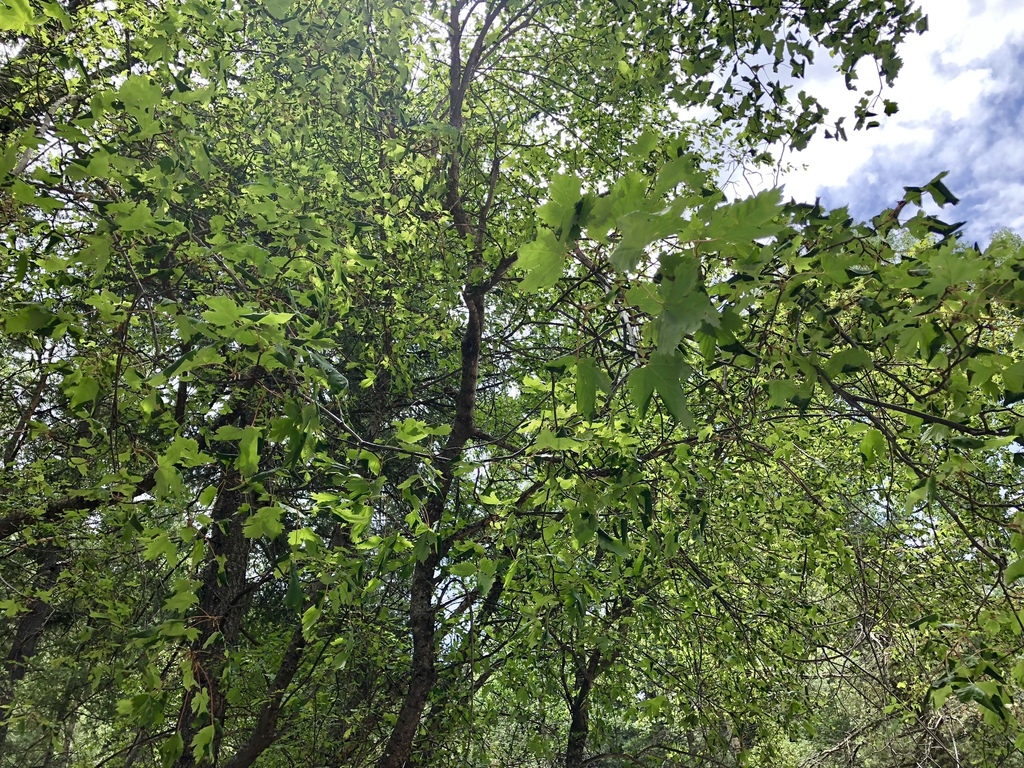
Rocky Mountain Maple
- Origin
- North America
- Part used
- See detailed notebook
- Tradition
- Traditional ethnobotany
A quiet shrub of the mountains and valleys of the North American West, the Rocky Mountain maple was known to Indigenous peoples who used its bark and young branches in household and medicinal preparations passed down from generation to generation. Less celebrated than its sugar-producing cousins, it nonetheless holds a quiet place in the continent's traditional herbalist notebooks.
Traditional uses
Care for skin irritation
The bark decoction was traditionally applied as a wash or compress to irritated or lightly damaged skin, according to uses reported by certain Indigenous communities.
A traditional digestive use
A light decoction of bark or twigs was sometimes drunk to help with passing digestive discomfort, in regional folk medicine.
Support for the airways
Some ethnobotanical sources mention an infusion used to soothe mild respiratory ailments, although this use remains poorly documented in detail.
Wood and sap with multiple uses
Beyond care, the pliable wood of the Rocky Mountain maple was used to make objects, while its sap, less sweet than that of the sugar maple, could occasionally be harvested.
Before you use it
A traditional use poorly documented scientifically: it is recommended to consult a health professional or a qualified herbalist before any internal use. Avoid use in pregnant or breastfeeding women, for lack of sufficient safety data. Do not use in young children without professional advice. Always verify the precise botanical identification of the species before harvesting, as maples can be confused with one another.
The detailed notebook
- Prepared as a paste or decoction
- Traditional duration of use
- Known contraindications
- Related species and their uses
Where to find it
Partner herbalists — available with the detailed notebook.
Sources
PFAF, Wikipedia