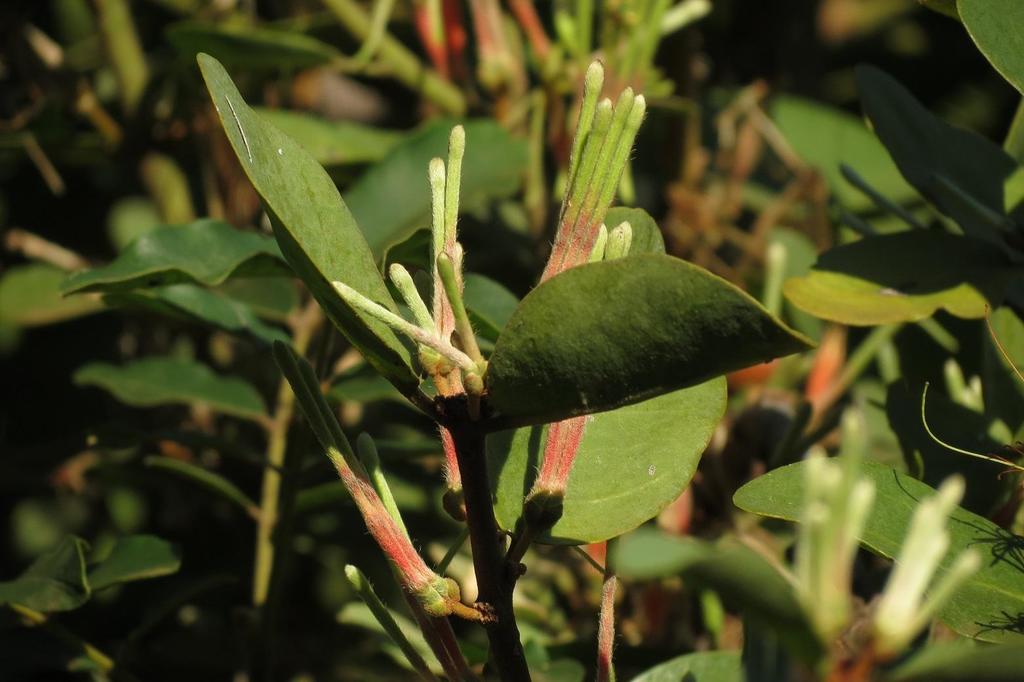
Erianthemum dregei
- Origin
- Africa
- Part used
- See detailed notebook
- Tradition
- Traditional ethnobotany
Erianthemum dregei is a parasitic plant of the Loranthaceae family, related to mistletoe, which grows in clumps on the branches of various trees in southern Africa. In South African folk traditions, its stems and leaves, harvested from the host tree, have long been used in local pharmacopeias, particularly to help with digestive troubles.
Traditional uses
Traditional digestive support
Decoctions of leaves and stems were used in certain southern African communities to ease digestive discomfort and common stomach aches.
Use against intestinal troubles
The plant is among the plant remedies traditionally associated with diarrhea and intestinal disorders, according to orally transmitted folk uses.
Application on skin conditions
Certain traditional practices report an external use of preparations made from this parasitic plant for skin care, though this is not widely documented.
Traditional use related to fertility
Like other parasitic Loranthaceae, Erianthemum dregei is said to have been used in certain traditional contexts related to women's health, a use to be approached with great caution given how limited the sources remain.
What to know before use
Parasitic plants of the Loranthaceae family, like mistletoe, can contain active compounds that vary depending on the host tree, making their toxicity unpredictable. A use not reliably documented outside local oral traditions: the chemical composition and risks are not clearly established by modern research. To be strictly avoided in pregnant or breastfeeding women, as well as in children, in the absence of safety data. Never use without the advice of a health professional or qualified herbalist familiar with African parasitic plants.
The detailed notebook
- Prepared as a paste or decoction
- Traditional duration of use
- Known contraindications
- Related species and their uses
Where to find it
Partner herbalists — available with the detailed notebook.
Sources
PFAF, Wikipedia