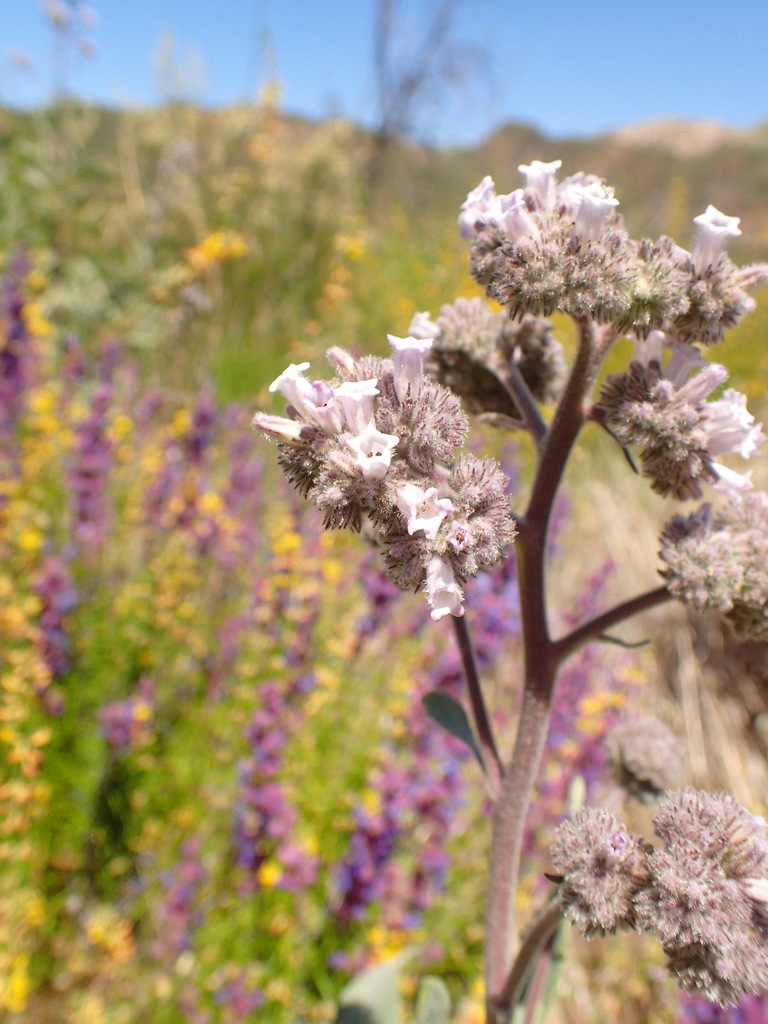
Eriodictyon crassifolium
- Origin
- North America
- Part used
- See detailed notebook
- Tradition
- Traditional ethnobotany
On the dry, rocky slopes of California, Indigenous peoples had long known the virtues of this resinous plant with thick, evergreen leaves. Nineteenth-century settlers and herbalists in turn adopted it, sometimes nicknaming it "yerba santa" for its revered use in respiratory ailments. It remains today a plant of tradition, little known outside its native range.
Traditional uses
Traditional support for the airways
The leaves were traditionally infused or smoked by the Amerindians of California to soothe the throat and bronchi during seasonal colds.
A traditional digestive use
A light decoction of the leaves was sometimes used to help with digestion after heavy meals, according to regional folk uses.
A soothing external application
Fresh leaves or a poultice preparation were traditionally applied to the skin to soothe minor irritation, bruises, or stings.
A traditional use as a strengthening tonic
Certain tribes considered the infusion a general tonic, taken in small amounts to support a tired body.
Before you use it
Avoid during pregnancy or breastfeeding, for lack of sufficient data. The leaves' sticky resin can cause skin irritation in sensitive individuals with prolonged contact. Do not exceed occasional, moderate use; consult a health professional before any prolonged use. Discouraged in young children without the advice of a qualified practitioner.
The detailed notebook
- Prepared as a paste or decoction
- Traditional duration of use
- Known contraindications
- Related species and their uses
Where to find it
Partner herbalists — available with the detailed notebook.
Sources
PFAF, Wikipedia