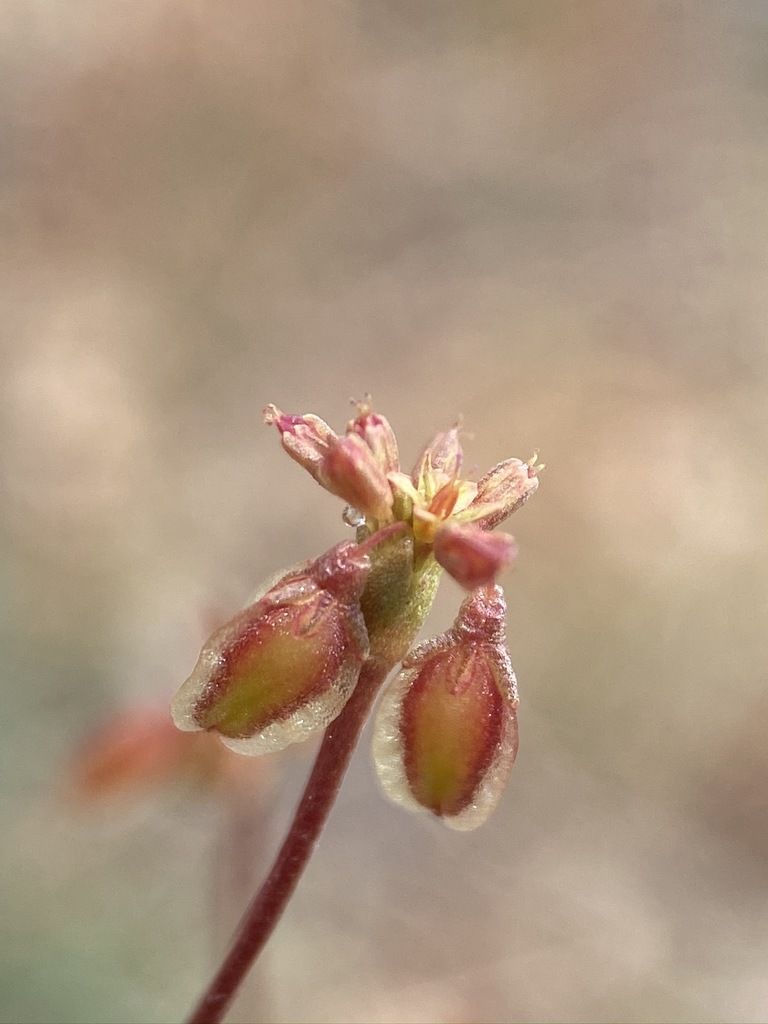
Eriogonum alatum
- Origin
- North America
- Part used
- Root
- Tradition
- Traditional ethnobotany
Beneath the arid plains of the American West, Eriogonum alatum raises its dry, tough stalks, long overlooked by armchair botanists but well known to the Indigenous peoples of the great plains. Its discreet, woody root held a modest but real place in local traditional pharmacopoeia. The Ancients of these territories kept its use for the ordinary ailments of everyday life.
Traditional uses
Easing mild digestive trouble
The root was traditionally decocted by certain Amerindian nations of the plains to relieve stomach pain and passing digestive discomfort.
Relieving various pain
A traditional use of the root in preparation is reported to ease certain bodily pain, particularly mild muscular or joint pain.
Calming coughs and an irritated throat
Certain local traditions mention the use of the root as a decoction to soothe coughing and throat irritation.
Traditional livestock care
In some communities, the plant was also included in preparations intended for livestock, reflecting a use broader than the human sphere alone.
Before you use it
A traditional use poorly documented scientifically: caution is warranted and the advice of a health professional is recommended before any use. Avoid in pregnant or breastfeeding women, for lack of sufficient safety data. Do not give to young children without the advice of a qualified professional. Do not exceed occasional, traditional uses: no reliable data exist on prolonged use.
The detailed notebook
- Prepared as a paste or decoction
- Traditional duration of use
- Known contraindications
- Related species and their uses
Where to find it
Partner herbalists — available with the detailed notebook.
Sources
PFAF, Wikipedia