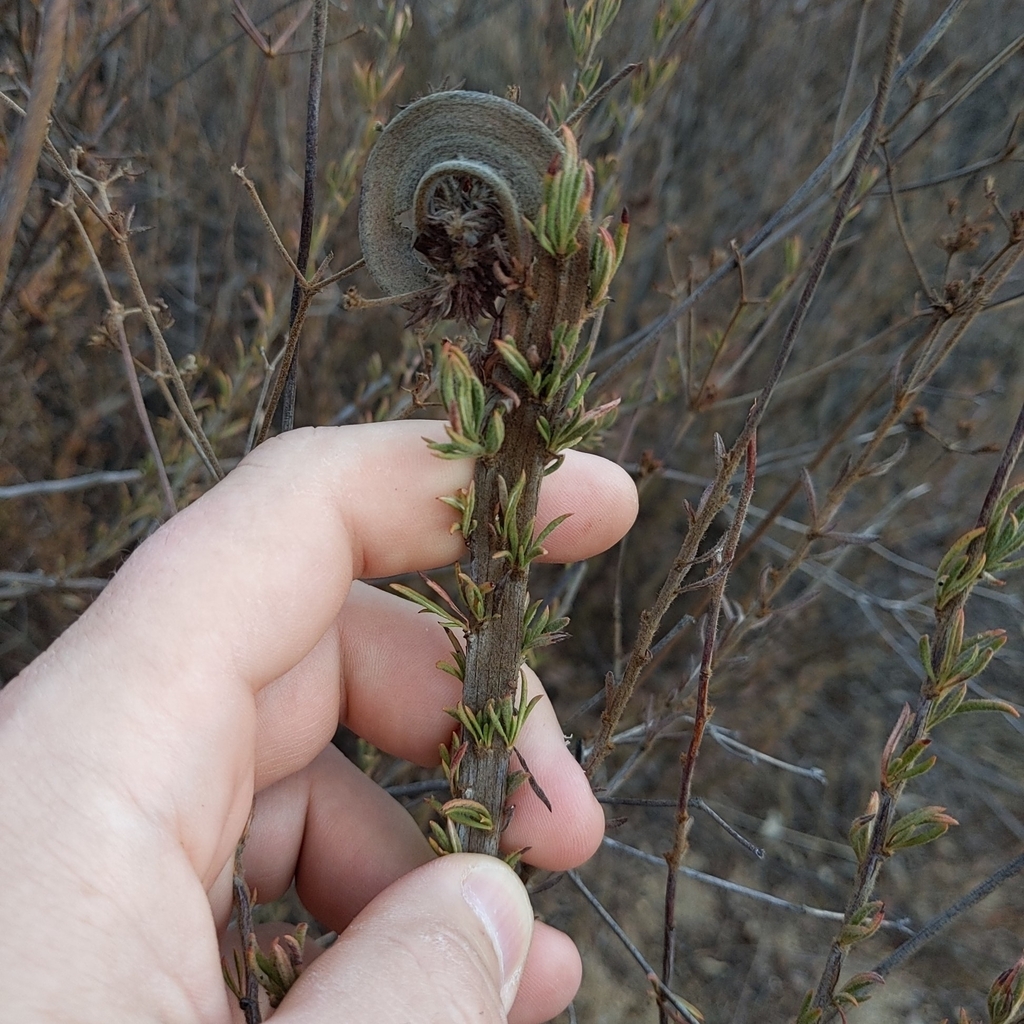
Eriogonum fasciculatum
- Origin
- North America
- Part used
- Root
- Tradition
- Traditional ethnobotany
On the dry slopes and chaparral of the American West grows Eriogonum fasciculatum, a modest subshrub with whitish-to-pink flowers, long known to the Indigenous peoples of California as "wild buckwheat." Its discreet but hardy root held a particular place in the traditional uses of several nations, notably to help with urinary ailments and various pain.
Traditional uses
Traditional support for the urinary tract
A root decoction was used by certain Amerindian nations of California to help with urinary discomfort and as a kidney tonic, according to local traditional pharmacopoeia.
Relief of headaches
A traditional use of the root as a decoction against headaches is reported, a practice documented among several Indigenous groups of the American Southwest.
Traditional digestive support
The root was sometimes used as a light preparation to ease minor digestive trouble, as part of regional folk uses.
A soothing external application
Certain local traditions mention an external use of root-based preparations to relieve minor skin irritation.
Before you use it
A traditional use poorly documented scientifically: seek the advice of a health professional before any use. Discouraged during pregnancy and breastfeeding, for lack of sufficient safety data. To be avoided in children in the absence of tolerance data. Do not prolong use without the advice of a herbalist or physician, particularly if under ongoing medication (possible kidney-level interactions).
The detailed notebook
- Prepared as a paste or decoction
- Traditional duration of use
- Known contraindications
- Related species and their uses
Where to find it
Partner herbalists — available with the detailed notebook.
Sources
PFAF, Wikipedia