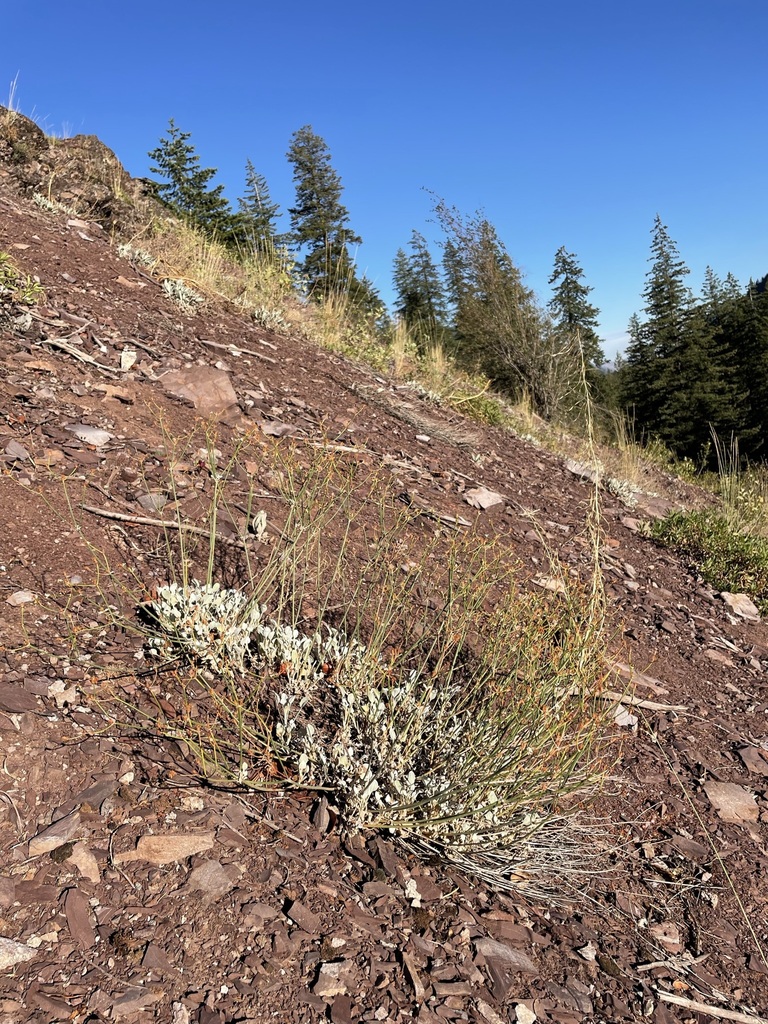
Eriogonum niveum
- Origin
- North America
- Part used
- Stem
- Tradition
- Traditional ethnobotany
On the arid high plateaus of North America, among the sagebrush and basalt outcrops, grows an unassuming plant covered in a fine whitish down: Eriogonum niveum, which settlers sometimes called “snow buckwheat” for its kinship with the buckwheat family. The Indigenous peoples of the Plateau (notably the Columbia, Okanagan, and Nez Perce) had long known the uses of its stem, often reduced to fumigation or a light tisane.
Traditional uses
Traditional fumigation for the respiratory tract
The dried stems of Eriogonum niveum were sometimes burned for their smoke, traditionally inhaled to soothe irritated throats or persistent coughs according to certain Plateau Indigenous practices.
A soothing light infusion
A weak stem-based tisane was occasionally used in local oral tradition to soothe minor digestive troubles.
External use on minor irritations
Some ethnobotanical sources report a wash or compress of a light decoction applied to the skin, for a traditional soothing purpose.
Traditional relief of headaches
The stem was sometimes used in a light preparation, applied or inhaled, to traditionally accompany headaches according to certain reported Indigenous uses.
Before you use it
A traditional use with little scientific documentation: to be approached with caution and never substituted for medical advice. Avoid any prolonged use or large doses, given insufficient safety data. Not advised for pregnant or breastfeeding women, or young children, for lack of data. Seek the advice of a health professional or an experienced herbalist before any use, particularly by fumigation.
The detailed notebook
- Prepared as a paste or decoction
- Traditional duration of use
- Known contraindications
- Related species and their uses
Where to find it
Partner herbalists — available with the detailed notebook.
Sources
PFAF, Wikipedia