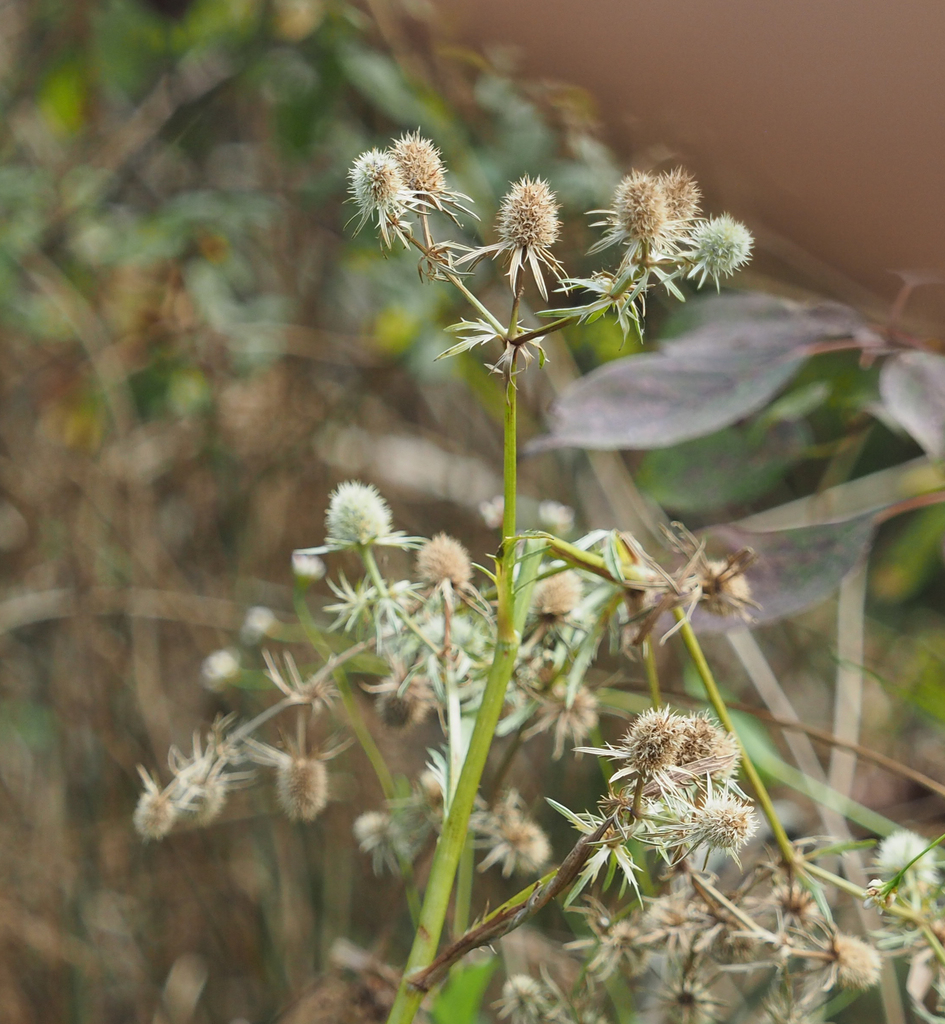
Eryngium aquaticum
- Origin
- North America
- Part used
- See detailed notebook
- Tradition
- Traditional ethnobotany
Eryngium aquaticum, also called "water eryngo" or "blue button," grew in the wet meadows and marshes of eastern North America. Native American healers and, later, the eclectic physicians of the nineteenth century, made great use of it, particularly for ailments of the urinary and respiratory tracts. Its root, with its distinctive odor, held a notable place in the region's traditional pharmacopoeias.
Traditional uses
Traditional support for the urinary tract
The root was traditionally used to support urinary comfort and promote elimination, notably in the folk practices of the southern United States.
Soothing bronchial irritation
Nineteenth-century eclectic physicians recommended this plant as a traditional expectorant for bronchial irritation accompanied by a persistent cough.
A traditional use for women's troubles
This plant was among the traditional remedies used, with caution, to accompany certain discomforts linked to the female cycle, although this use remains poorly documented by modern sources.
A mild traditional stimulant
It was also credited, in certain folk traditions, with a gentle stimulating action on digestion, although this use is less central than the preceding ones.
Before you use it
Avoid any use during pregnancy and breastfeeding, owing to a traditional use linked to the female cycle that is insufficiently documented and potentially risky. Do not give to young children without the advice of a qualified health professional. Follow dosage scrupulously, as the plant can cause digestive irritation at high doses. Seek the advice of a health professional if undergoing medication treatment, particularly diuretics.
The detailed notebook
- Prepared as a paste or decoction
- Traditional duration of use
- Known contraindications
- Related species and their uses
Where to find it
Partner herbalists — available with the detailed notebook.
Sources
PFAF