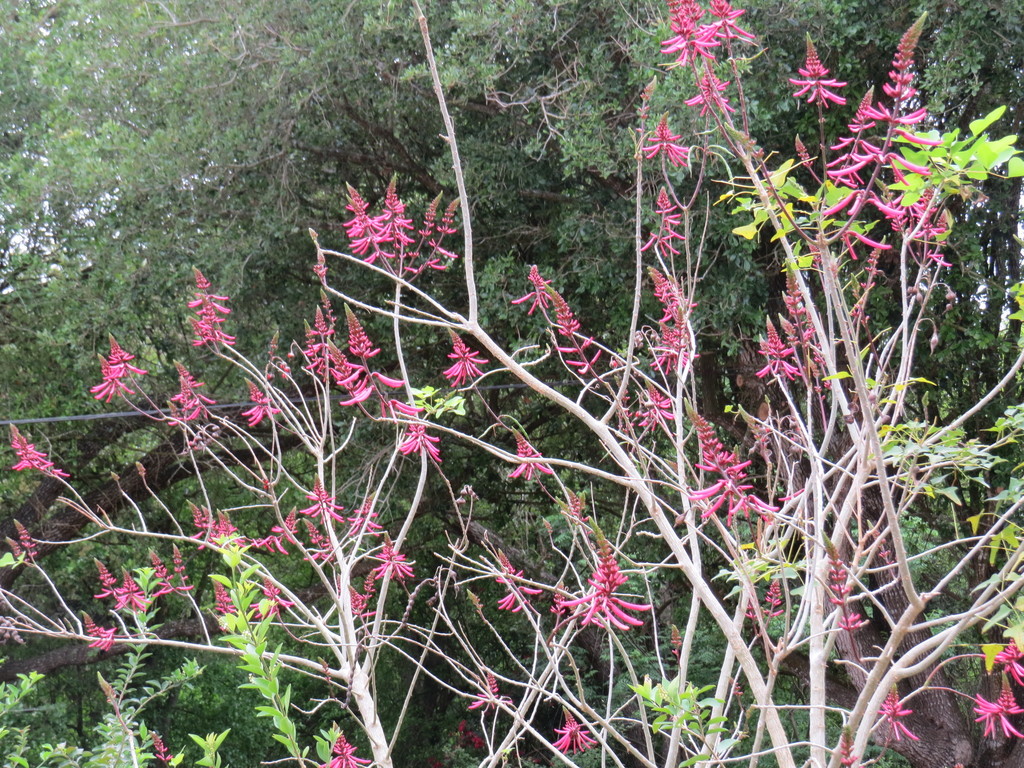
Erythrina herbacea
- Origin
- North America
- Part used
- Leaves
- Tradition
- Traditional ethnobotany
The coral bean, as herbalists of the southern United States sometimes called it, is distinguished by its clusters of scarlet flowers and its brilliant red seeds, long admired but also feared. The Indigenous nations of the North American Southeast knew this plant and made limited use of it, primarily from its leaves. Its botanical name, Erythrina, recalls the color of blood — a sign that this plant has never been treated lightly.
Traditional uses
Traditional relief of joint pain
The leaves were sometimes applied as a poultice to painful joints according to certain folk traditions of the southern United States. This use remains poorly documented in written sources and should be approached with caution.
Skin care through external application
Used externally, crushed or infused leaves are said to have soothed certain skin irritations in localized folk practices.
A reported mild sedative effect
The plant belongs to a genus (Erythrina) whose several species are traditionally associated, elsewhere in the world, with mild calming properties, a use sometimes mentioned but not specifically established for this particular species.
Seeds used in traditional adornment
The bright red seeds, highly ornamental, were traditionally used by certain Indigenous peoples for making necklaces and adornments, more than for internal use.
Before you use it
The seeds of Erythrina herbacea are considered toxic and must never be ingested; they contain curare-like alkaloids. Internal use of the leaves is not sufficiently documented to be recommended; any oral use should be supervised by a qualified health professional. This plant is not advised for pregnant or breastfeeding women, or young children, as a precaution. If in doubt, undergoing medication treatment, or in a fragile condition, always seek the advice of a doctor or qualified herbalist before any use.
The detailed notebook
- Prepared as a paste or decoction
- Traditional duration of use
- Known contraindications
- Related species and their uses
Where to find it
Partner herbalists — available with the detailed notebook.
Sources
PFAF, Wikipedia