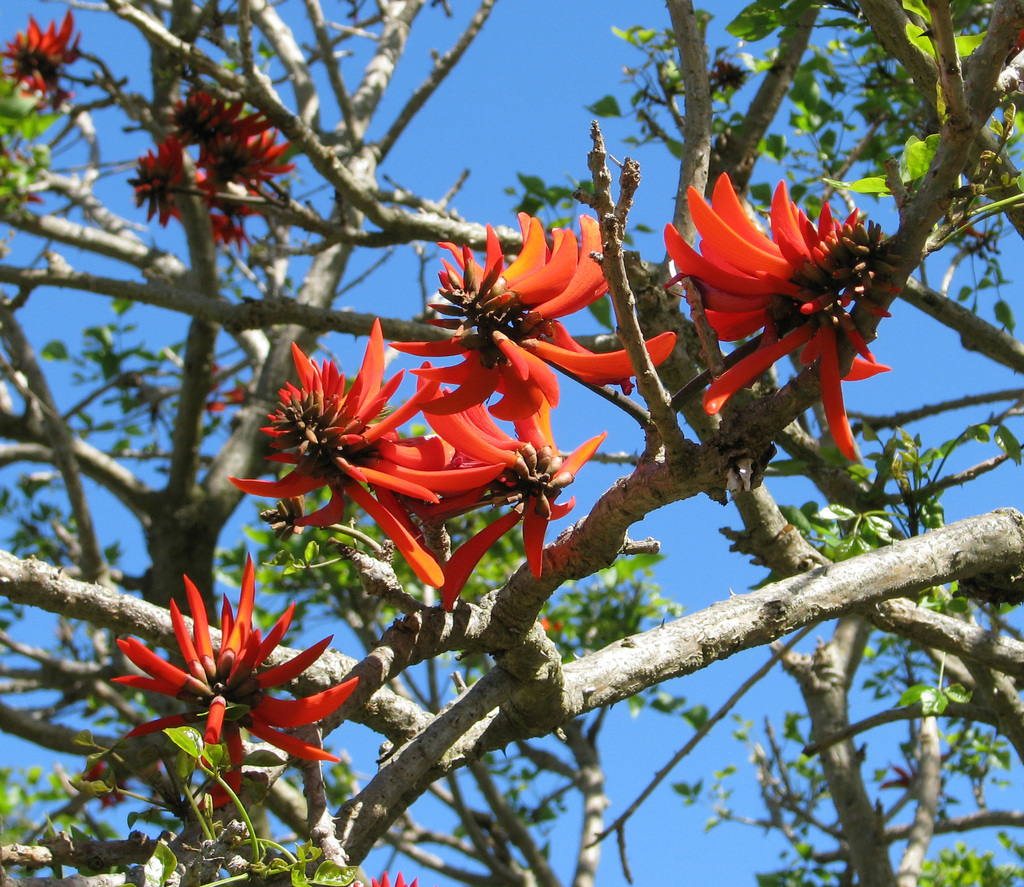
Erythrina lysistemon
- Origin
- Africa
- Part used
- See detailed notebook
- Tradition
- Traditional ethnobotany
On the high plateaus and savannas of southern Africa, the coral tree — whose scarlet flowers herald renewal after the dry season — holds a long-standing place in Zulu and Sotho traditional pharmacopeias. Its bark, root, and leaves were entrusted to healers (izinyanga) for a range of uses, for both body and spirit.
Traditional uses
Care of wounds and skin conditions
Crushed bark or a decoction was traditionally applied to wounds, ulcers, and skin conditions to promote soothing.
Joint and muscle pain
Poultices or ointments made from the bark and roots were used externally to relieve rheumatic pain as reported by tradition.
Respiratory conditions
A bark decoction was traditionally drunk for coughing or lung conditions, according to uses reported in Zulu and Xhosa pharmacopeias.
Traditional calming use
In certain South African traditions, the bark was used in a light preparation for its reported calming properties, linked to the erythrina alkaloids present in the plant.
What to know before use
The plant contains erythrina alkaloids with known curare-like properties; uncontrolled internal use can present neuromuscular risks. Strongly not recommended during pregnancy and breastfeeding, as well as in children. Do not combine with sedatives, muscle relaxants, or central nervous system depressants without medical advice. Internal use must imperatively be supervised by a health professional or trained practitioner, given this plant's narrow therapeutic margin.
The detailed notebook
- Prepared as a paste or decoction
- Traditional duration of use
- Known contraindications
- Related species and their uses
Where to find it
Partner herbalists — available with the detailed notebook.
Sources
PFAF