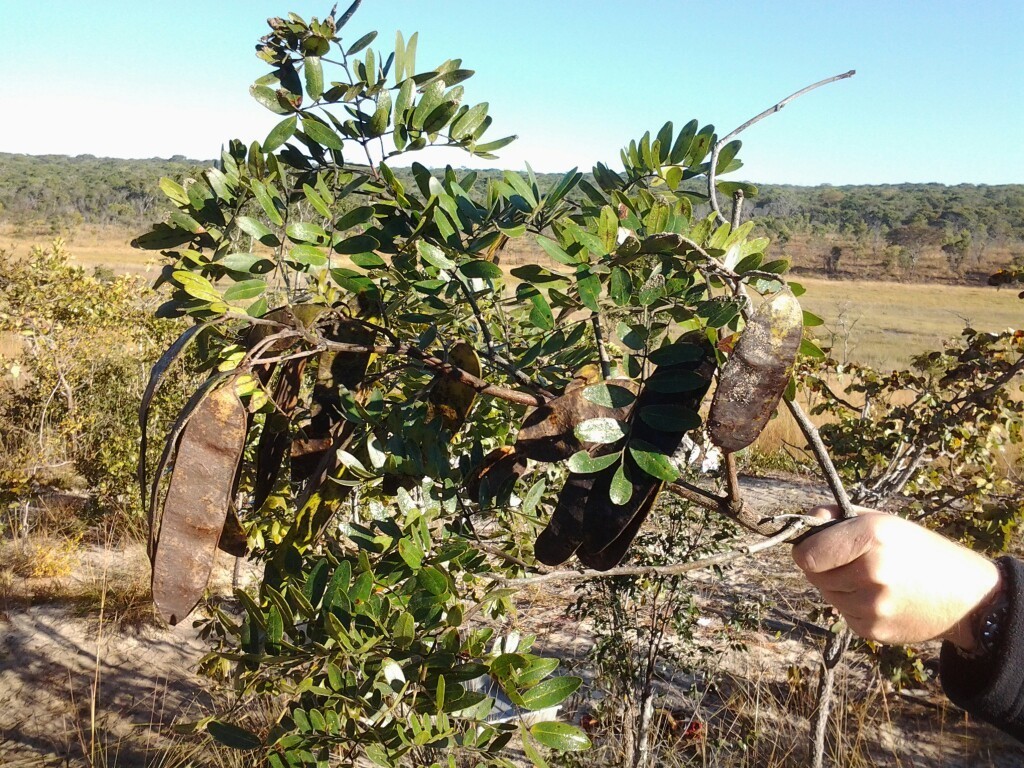
Erythrophleum africanum
- Origin
- Africa
- Part used
- See detailed notebook
- Tradition
- Traditional ethnobotany
Erythrophleum africanum, a tree of the wooded savannas of southern and central Africa, has long been regarded with both respect and fear by the communities living alongside it. Its bark, rich in powerful active compounds, was traditionally associated with trial by ordeal as well as certain medicinal uses closely supervised by healers. This old witness of the savannas remains a striking example of the thin line between remedy and poison in traditional pharmacopeias.
Traditional uses
Traditional trial by poison
The bark of this tree was historically used in certain regions of southern Africa for trials by ordeal, where its cardiac toxicity served as a test of guilt according to ancient beliefs.
Traditional external applications
In certain local traditions, highly diluted preparations made from bark or root were used externally to relieve localized pain, always under the supervision of an experienced healer.
Remedy for livestock
Decoctions were sometimes used empirically by certain herders to treat livestock ailments, a practice now largely abandoned due to the risks.
Component of toxic preparations
The bark's cardiotoxic properties made it, in certain regions, an ingredient in preparations intended for hunting or fishing, illustrating longstanding knowledge of local plant poisons.
What to know before use
This plant is highly toxic: it contains powerful cardiotoxic alkaloids (notably erythrophleine) that can cause serious, even fatal, heart problems, even at a low dose. No internal use should be attempted without strict supervision by a health professional or an experienced traditional herbalist who knows the precise dosages; self-medication is strongly discouraged. Strictly not recommended for pregnant or breastfeeding women, children, or people with heart conditions or on medication (risk of interactions). Handling the bark and roots should be done with caution, avoiding any prolonged contact with mucous membranes or wounds.
The detailed notebook
- Prepared as a paste or decoction
- Traditional duration of use
- Known contraindications
- Related species and their uses
Where to find it
Partner herbalists — available with the detailed notebook.
Sources
PFAF