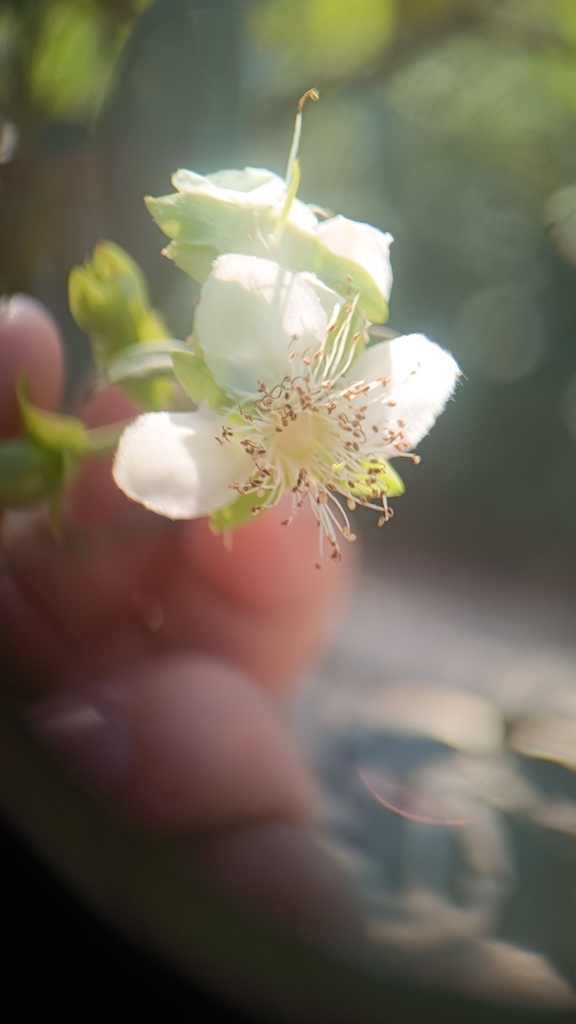
Eugenia calycina
- Origin
- South America
- Part used
- Leaves
- Tradition
- Traditional ethnobotany
Beneath the canopies of South America, Eugenia calycina is one of those discreet myrtles whose aromatic leaves were known to the local herbalists of old. Less famous than its cousins Eugenia uniflora or the guava, it has nonetheless made its way through folk remedy notebooks passed down through generations. Its use remains above all local and empirical, reported by oral tradition more than by great treatises.
Traditional uses
Traditional digestive support
The leaves were infused to accompany slow or heavy digestion, following South American folk practices.
Soothing the respiratory tract
A light leaf decoction was sometimes used traditionally to soothe the throat and mild respiratory ailments.
External care for minor irritations
Used externally, infused leaves traditionally served as a wash or compress to calm irritated skin.
A calming evening infusion
Like many aromatic myrtles, its leaves were sometimes drunk as an evening tea for their supposed soothing effect.
What to know before use
A scientifically under-documented traditional use: seek the advice of a health professional before any use. Avoid during pregnancy or breastfeeding, for lack of sufficient safety data. Do not exceed occasional, moderate use, in the absence of long-term toxicity data. Not recommended for young children without specialist advice.
The detailed notebook
- Prepared as a paste or decoction
- Traditional duration of use
- Known contraindications
- Related species and their uses
Where to find it
Partner herbalists — available with the detailed notebook.
Sources
PFAF, Wikipedia